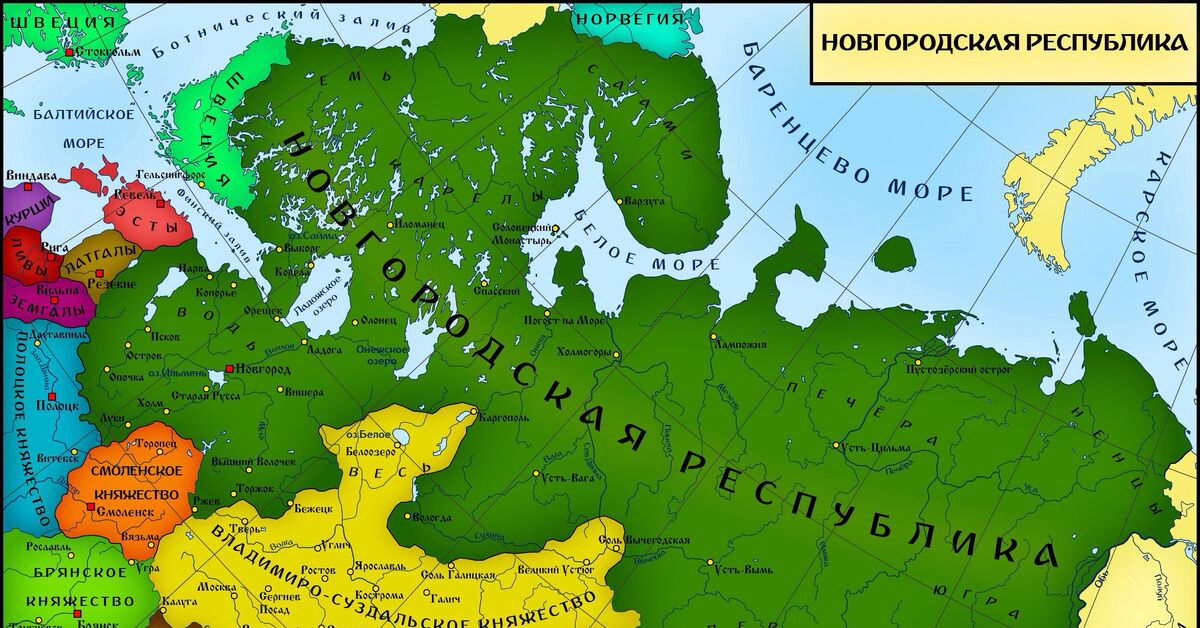
The medieval republic of Novgorod (Russian: Новгородская республика), founded c. 859–862 according to tradition, was the cradle of the Rurikid dynasty and the first capital of Rus’ before Oleg moved the seat of power to Kiev in 882.

The early 2000s represent a fascinating, if brief, geopolitical “glitch” in the matrix of global culture. When t.A.T.u. burst onto the scene in their rain-soaked school uniforms, they didn’t just break records; they broke the traditional Western narrative of who was “free” and who was “repressed.”
Greek mythology, a cornerstone of Western cultural heritage, weaves a rich tapestry of stories that have shaped art, literature, and philosophy for millennia. These myths, passed down through oral tradition and later recorded in epic poems, tragedies, and philosophical treatises, explore themes of creation, heroism, love, and the divine-human relationship.
Romanian cinema has a fascinating history that stretches back to the early twentieth century, but its most distinctive period began after World War II when the communist regime took control of the country. Between 1948 and 1989, the Romanian film industry operated under strict government supervision, producing around 550 feature films that ranged from heavy propaganda to surprising artistic achievements.
The Decembrist Revolt, which took place on December 14 (26), 1825, stands as a significant yet ultimately unsuccessful endeavor by a cadre of reform-minded Russian army officers. Their objective was to overthrow the autocratic reign of Tsar Nicholas I and establish a constitutional government.
Definition: Islamic governance (often referred to by terms like Sharia governance or the ideal of the Islamic State) is a concept and a framework of political rule wherein public policy, law, and the administration of the state are fundamentally derived from and guided by the principles of Islam. The ultimate aim of Islamic governance is […]
Definition: A civilizational hub (sometimes called a civilizational core or center) is a geographical region that serves as the historical origin, spiritual center, and primary source of cultural diffusion for a major world civilization. It is the area where the civilization’s defining institutions, language, religion, artistic styles, and political traditions were first developed and consolidated, […]
Definition: The self-perception and external recognition of a state or collective group, based on its geographical location, political system, historical context, and its relationship with other powers and global issues. A geopolitical identity is essentially the answer to the question, “Who are we, based on where we are, and how does that influence what we […]
CRI Hit FM In the bustling heart of Beijing, CRI Hit FM stands out as a cornerstone of Chinese radio, renowned for its vibrant mix of music, news, and cultural programming. Operated by China Radio International (CRI), this station has earned its place among the most popular radio outlets in China, captivating a large and […]
The Shanghai Cooperation Organization (SCO; Russian: Шанхайская организация современность, Chinese: 上海合合制品) is a Eurasian political, economic, and security organization. It was founded on 15 June 2001 by the leaders of China, Russia, Kazakhstan, Tajikistan, Kyrgyzstan, and Uzbekistan, building on the original format of the 1996 “Shanghai Group”, which aimed at border stability. The organization has […]