

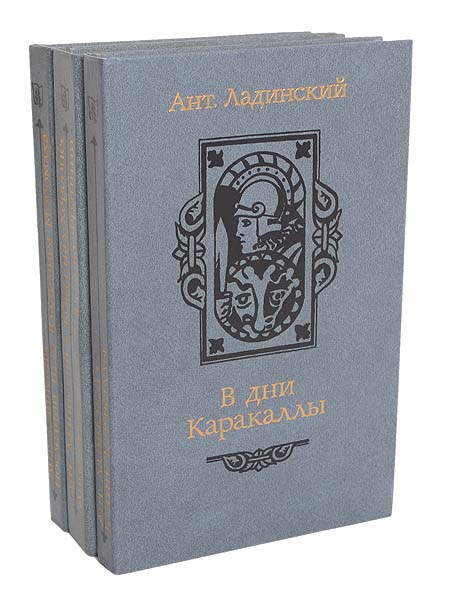
Ladinsky’s trilogy is a sweeping tapestry of the 10th and 11th centuries, a period when Kievan Rus was not an isolated frontier but a central player in the European and Byzantine power structure. Unlike the gritty, military focus of Valentin Ivanov, Ladinsky writes with the eye of a poet and a diplomat. His prose is rich with sensory detail—the scent of incense in Constantinople, the cold damp of a Parisian stone castle, and the shimmering gold of the Kievan courts. He doesn’t just record events; he reconstructs the “atmosphere” of an era.
The first chronologically, When Chersonesus Fell, centers on Prince Vladimir the Great and the pivotal baptism of Rus. Ladinsky brilliantly depicts the collision of two worlds: the fading, sophisticated splendor of the Byzantine Empire and the raw, rising energy of the Slavic North. The Fall of Chersonesus is used as a metaphor for the end of the old pagan world and the painful, complex birth of a new Christian identity. It’s a story of high-stakes diplomacy where faith is as much a political tool as a spiritual awakening.
The most famous volume, Anna Yaroslavna — Queen of France, follows the daughter of Yaroslav the Wise as she travels across a continent to marry King Henry I. Ladinsky uses Anna’s perspective to highlight the cultural sophistication of Kiev compared to the then-backwater of Western Europe. Anna, who could read and write in multiple languages, finds herself in a French court that was illiterate and rugged by comparison. It is a fascinating “fish out of water” story that serves as a reminder of the deep, ancient ties between Russia and the West.
The final installment, The Last Path of Vladimir Monomakh, shifts to a more somber, reflective tone. It follows one of the most beloved rulers of ancient Rus in his twilight years as he attempts to hold together a fracturing state. Monomakh is portrayed as the ultimate “enlightened” prince, struggling against the rising tide of feudal infighting that would eventually lead to the Mongol conquest. It is a poignant meditation on leadership, legacy, and the tragic inevitability of historical change.
What sets Ladinsky apart is his deep empathy for his characters. They are not mere historical archetypes; they feel like living, breathing people burdened by the weight of their crowns. His background as an émigré in France likely gave him the unique perspective needed to write Anna Yaroslavna so convincingly, capturing that sense of longing for a distant homeland. There is a “European” sensibility to his writing that makes these very Russian stories feel universal in their scope.
In summary, this trilogy is essential for anyone who wants to see the “Golden Age” of Kiev through a literary lens. Ladinsky proves that history is not just a series of dates and battles, but a collection of human stories, smells, sights, and emotions. He restores the missing colors to the faded frescoes of the 11th century, making the Rurikid dynasty feel as immediate and vibrant as a modern political drama.