
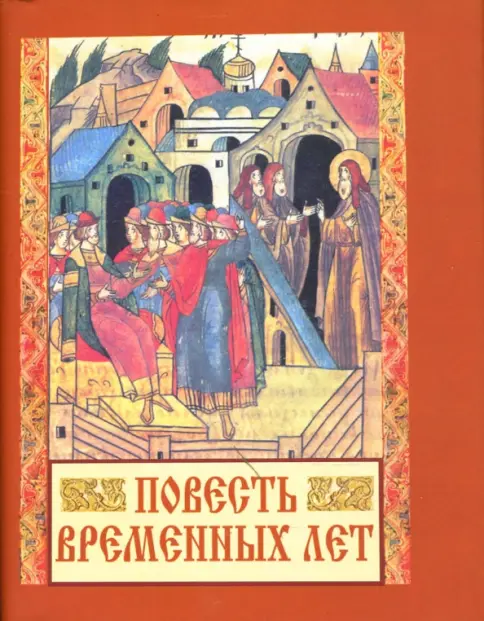
The Primary Chronicle (or Tale of Bygone Years) is not just a book; it is the “Genesis” of the East Slavic world. In this specific edition, the translation by Dmitry Likhachev—the 20th century’s preeminent scholar of Old Russian literature—acts as a bridge over a thousand-year gap. Likhachev and Dmitriev manage to preserve the rhythmic, almost hypnotic cadence of the original Old Church Slavonic while making the text accessible to a modern reader. It feels less like a dusty archive and more like an epic poem being recited by a fire.
The narrative structure is fascinatingly fragmented, moving from grand geopolitical shifts to intimate, often brutal, anecdotes. You get the “Calling of the Varangians,” where the Slavic tribes essentially ask for outside management, and the legendary exploits of Oleg the Prophet and Olga of Kiev. This edition is particularly valuable because of its commentary, which helps distinguish between historical fact and the hagiographic “embellishments” added by the monks of the Kiev Monastery of the Caves.
At its core, the Chronicle is obsessed with the question of legitimacy. The monks weren’t just recording dates; they were constructing a national identity and a divine lineage for the Rurikid princes. You can see the tension between the pagan past and the newly adopted Christian faith on every page. The descriptions of Prince Vladimir’s choice of religion—rejecting Islam for its lack of wine and being won over by the “heavenly” beauty of the Byzantine liturgy—remain some of the most famous passages in world historiography.
The prose style is a curious blend of dry administrative record-keeping and vivid, cinematic storytelling. One moment you’re reading about a treaty with the Byzantines, and the next, you’re witnessing Princess Olga’s elaborate, fiery revenge on the Drevlians. The Likhachev translation ensures that the grit and the grandeur of these scenes aren’t lost in academic sterility. It captures the raw energy of a civilization trying to define itself against the backdrop of the great Eurasian steppe.
One must approach this work with a grain of salt, of course. It is a deeply biased document, written to favor the ruling house of Kiev and the Orthodox Church. However, that bias is precisely what makes it so interesting. It tells us not just what happened, but how the early Russians wanted to be remembered. It sets the stage for every book that follows on your list, establishing the themes of unity, external threat, and the search for a “strong hand” to lead.
Ultimately, reading the Primary Chronicle in this translation is an exercise in historical detective work. It provides the DNA of the Russian, Ukrainian, and Belarusian cultures. For anyone serious about understanding the roots of the East Slavic identity, this isn’t just a recommendation—it’s a requirement. It is the original script from which all subsequent Russian history has been performed.