

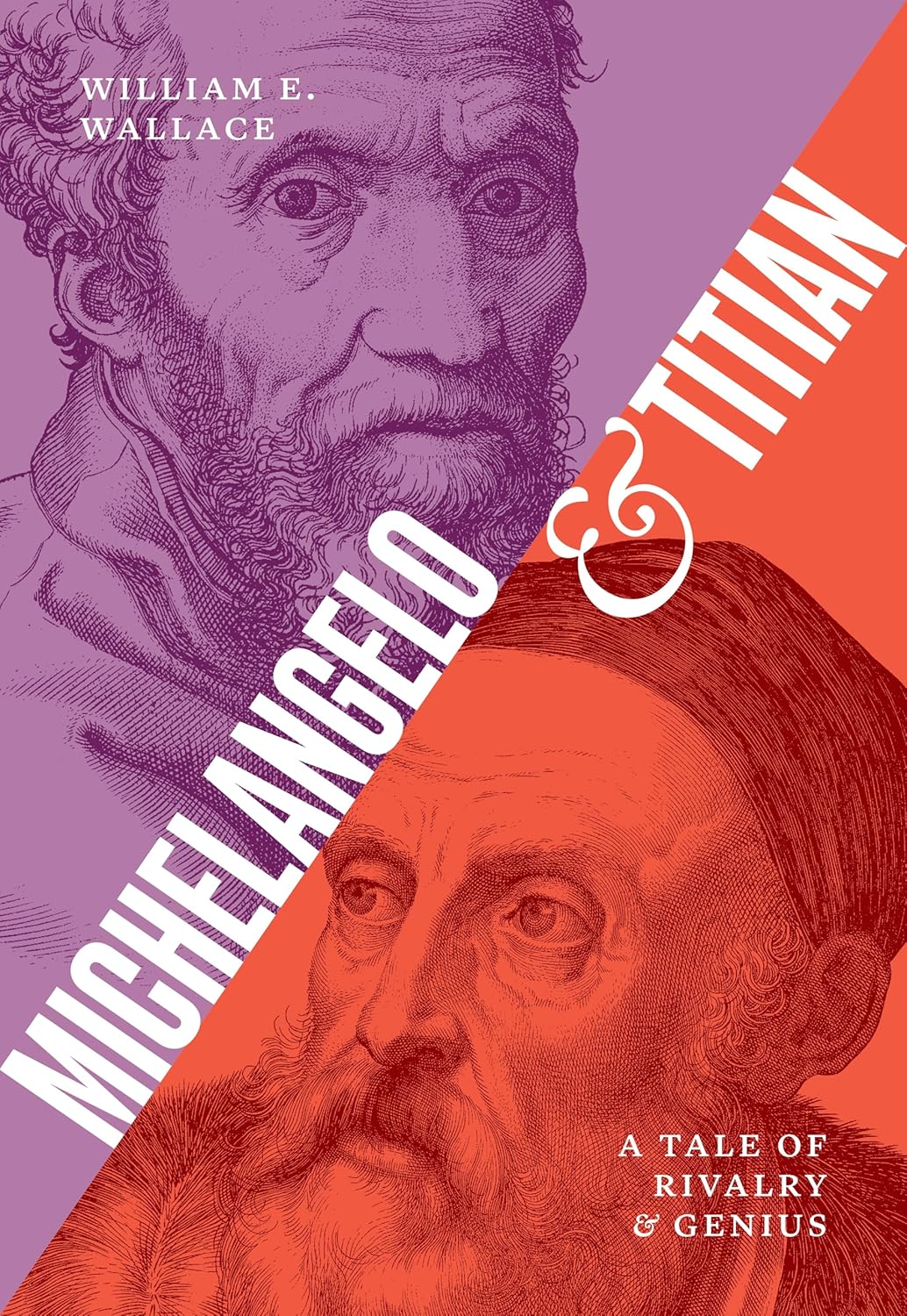
William E. Wallace’s “Michelangelo and Titian: A Tale of Rivalry and Genius” is a fascinating exploration of two of the Renaissance’s most influential artists. Rather than focusing solely on their supposed rivalry, Wallace delves into the unique qualities that made each artist a genius in his own right. The book offers a fresh perspective by examining how Michelangelo and Titian, though from different regions and with differing styles, influenced and inspired each other indirectly through their shared artistic environment.
Wallace begins by setting the stage with a vivid account of Michelangelo’s life and achievements, highlighting his mastery of sculpture, painting, and architecture. He then turns to Titian, the Venetian master known for his vibrant use of color and dynamic compositions. By comparing their approaches, Wallace illustrates how Michelangelo’s emphasis on disegno (design and drawing) contrasted with Titian’s focus on colore (color and spontaneity). This dichotomy, however, is not presented as a strict opposition but rather as complementary forces that shaped Renaissance art.
One of the book’s strengths is its exploration of the broader cultural context in which Michelangelo and Titian worked. Wallace discusses how ideas circulated during the Renaissance, not just through direct collaboration but also through shared drawings, studio visits, and the burgeoning print culture. He also touches on the role of regional pride, or campanilismo, in shaping the reception of their work, noting how Michelangelo’s Florentine background sometimes gave him an edge in the eyes of contemporaries like Giorgio Vasari.
Despite its title, the book does not overemphasize the rivalry between Michelangelo and Titian. Instead, Wallace speculates intelligently about moments when their paths might have crossed or when one artist’s work could have influenced the other. For example, he considers the impact of Alfonso d’Este’s studiolo in Ferrara, which featured commissions by Titian, on Michelangelo’s own artistic development. These insights add depth to our understanding of how these two giants coexisted and contributed to the Renaissance’s artistic flourishing.
In conclusion, “Michelangelo and Titian” is a well-researched and engaging read that sheds light on the complex relationship between two of art history’s most celebrated figures. Wallace’s writing is accessible and informative, making the book suitable for both scholars and general readers interested in the Renaissance. While it may leave some wanting more on certain topics, such as the shared influence of the antique on both artists, it remains a valuable contribution to the field and a thought-provoking exploration of genius, rivalry, and artistic dialogue.