
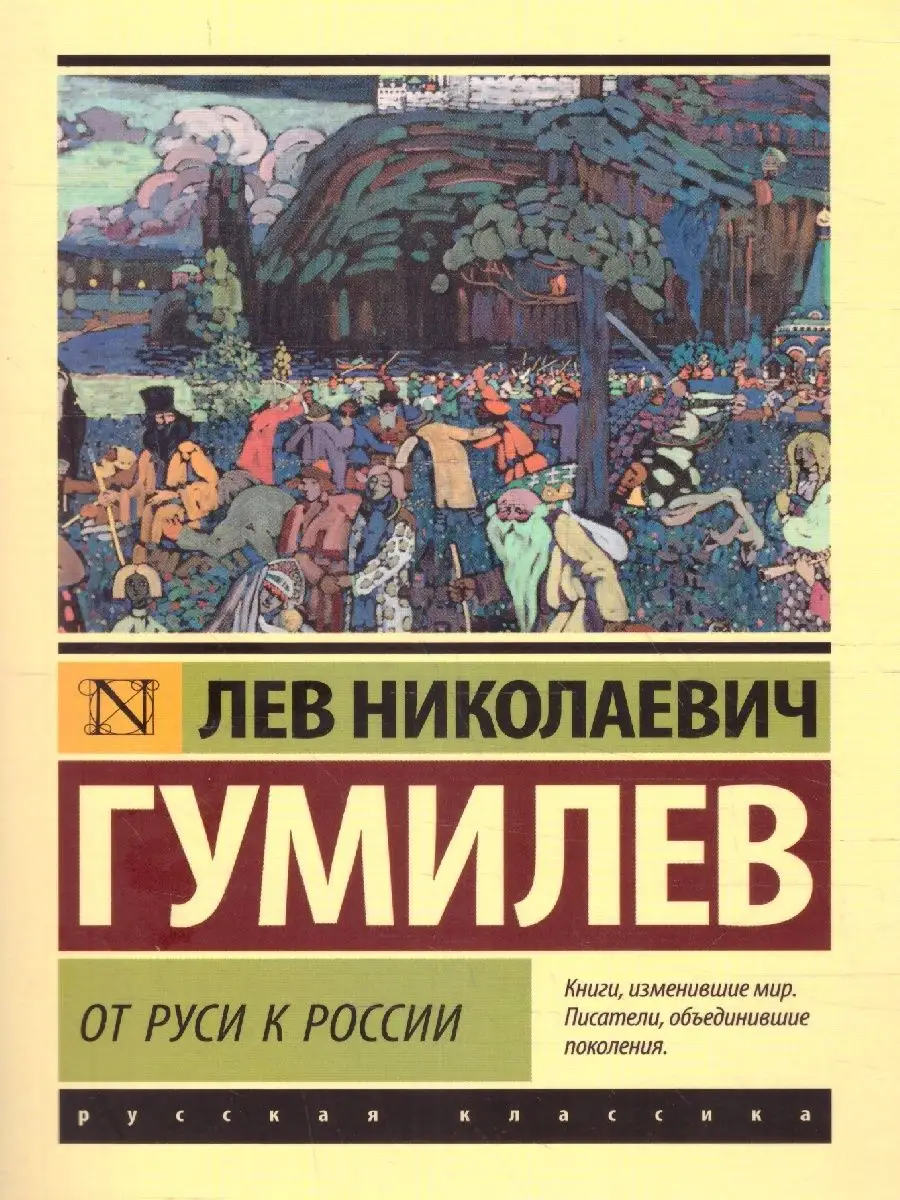
Lev Gumilyov’s From Rus to Russia is a work of breathtaking scope and controversial brilliance. Gumilyov, the son of two legendary poets (Anna Akhmatova and Nikolay Gumilyov) and a long-term survivor of the Gulag, didn’t just write history—he invented a new way to look at it called “Ethnogenesis.” This book, his last major work, serves as a refined summary of his theories, explaining how the Russian people emerged as a distinct ethnic group through a combination of geography, climate, and a mysterious biological energy he called “passionarity.”
The core of Gumilyov’s argument is the “Passionarity Cycle.” He believed that certain individuals are born with an excess of energy that drives them to change the world, often at the cost of their own lives. According to Gumilyov, ethnic groups (ethnoi) have lifespans similar to biological organisms: they are born in a “passionary explosion,” grow, peak, and eventually decline into “obscurity.” He maps this cycle onto Russian history, arguing that the transition from ancient Kievan Rus to the modern Russian Empire was not a linear progression, but a death and a rebirth.
One of the most provocative aspects of this book is Gumilyov’s defense of the Mongol-Tatar period. Where most historians see a “Yoke” of brutal oppression, Gumilyov sees a “symbiosis.” He argues that Alexander Nevsky’s alliance with the Golden Horde was a brilliant strategic move that protected the Russian cultural core from the “truly” existential threat of the Teutonic Knights and the Catholic West. This Eurasianist perspective—positioning Russia as a unique bridge between Europe and Asia rather than a peripheral European state—remains a cornerstone of modern Russian political thought.
Gumilyov’s writing is remarkably engaging, often reading more like a series of charismatic university lectures than a dry academic text. He has a gift for synthesis, pulling in data from climatology, biology, and geography to explain why certain battles were won or why certain cities rose to prominence. However, a “candid” note is necessary here: many mainstream historians and scientists view his theories on cosmic radiation and biological energy as “pseudoscientific.” He is more of a historical poet or a philosopher than a traditional empirical historian.
Despite (or perhaps because of) its controversial nature, the book is essential for understanding the contemporary Russian “Eurasian” identity. Gumilyov provided a framework for Russians to feel proud of their unique position on the map, suggesting that their strength comes from their ability to integrate various ethnic influences. He rejects the idea of “higher” or “lower” cultures, focusing instead on how well a people fits into their “enclosing landscape.”
In conclusion, From Rus to Russia is a fascinating, high-octane intellectual journey. It challenges almost every conventional narrative of Russian history and forces the reader to think about the “why” rather than just the “when.” Whether you buy into his theory of passionarity or not, Gumilyov’s vision of Russia as a vibrant, multi-ethnic organism shaped by the Great Steppe is impossible to ignore. It is a book that explains not just what Russia was, but what many Russians believe it is today.