

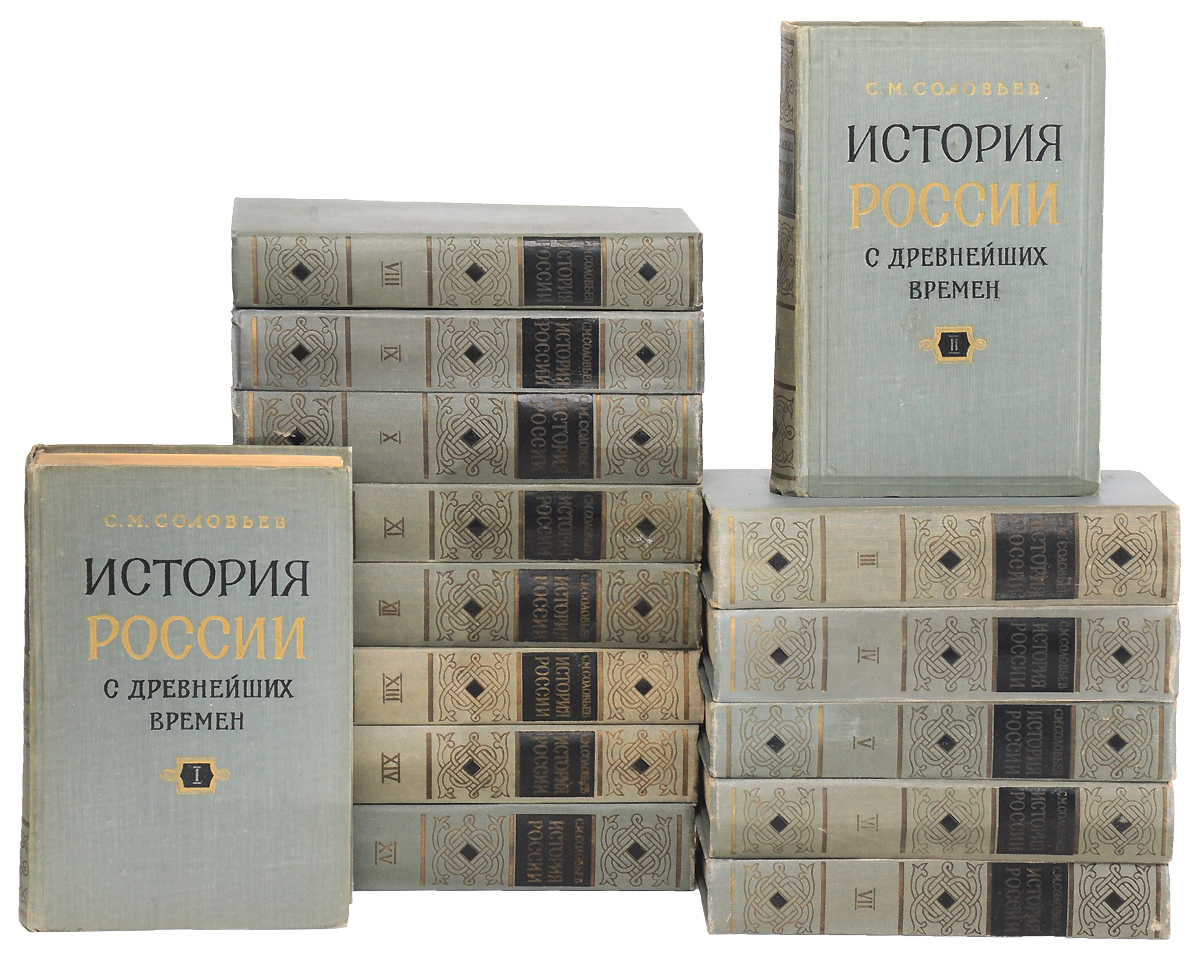
Reading Sergey Solovyov’s History of Russia is less like reading a book and more like embarking on a 29-volume expedition. It is the most ambitious historical project ever undertaken by a single Russian scholar. Solovyov didn’t just want to tell stories; he wanted to uncover the “organic” laws of Russian development. Before him, history was often treated as a series of biographies of Tsars; Solovyov transformed it into a narrative of a living, breathing social organism.
Solovyov belongs to the “State School” of historiography. His central thesis is the transition from “tribal” life to “state” life. He views the Russian state not as an external force imposed on the people, but as the inevitable and necessary result of the people’s growth and their struggle for survival. To Solovyov, the state is the hero of the story, the only entity capable of organizing the vast, chaotic Eurasian space into a coherent civilization.
A recurring theme in this massive work is the environmental and geographical pressure on the Russian people. Solovyov famously wrote about the “Forest” and the “Steppe.” He argued that Russia’s character was forged by the endless struggle against the nomadic “predators” of the open plains and the difficulty of taming the immense northern forests. This “geographical determinism” was revolutionary at the time and influenced every Russian historian who followed, from Klyuchevsky to Gumilyov.
Despite its academic weight, Solovyov’s prose is remarkably dignified and clear. He has a 19th-century penchant for long, flowing sentences, but they are never hollow. There is a sense of “historical inevitability” in his writing—a belief that Russia was moving toward a grand destiny. He spent 30 years of his life writing a volume a year, and that rhythmic, disciplined pulse is felt in the text; it is a work of immense intellectual stamina.
The work remains a goldmine for those interested in the transition to the modern era, particularly his exhaustive treatment of Peter the Great. Solovyov was a staunch defender of Peter’s reforms, viewing them not as a violent break with the past, but as a necessary “coming of age” for the Russian state. While he died before he could finish the reign of Catherine the Great, the 29 volumes he left behind cover almost 900 years with a level of detail that has never been surpassed.
For a modern reader, Solovyov is the “source code.” You read him to understand the classical, imperial Russian worldview. He provides the structural logic that explains why Russia became a centralized autocracy. It is a demanding read, best consumed in focused sections, but it offers a sense of historical scale that makes most modern history books feel like pamphlets. It is the definitive record of how Russia saw its own rise to power.