

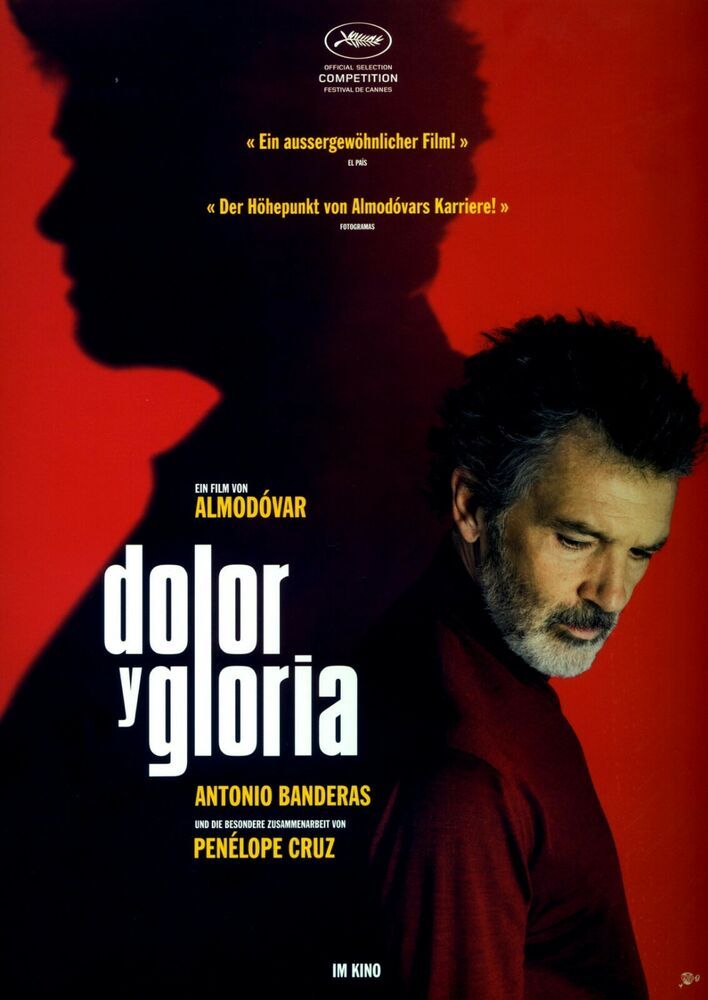
Pedro Almodóvar’s Dolor y gloria is a deeply personal and visually sumptuous meditation on memory, art, and aging. At its core, the film is a semi-autobiographical reflection on the life of a director who, like Almodóvar himself, is confronting physical decline and emotional paralysis. Through the story of Salvador Mallo (played masterfully by Antonio Banderas), the film explores how creativity can become both a source of salvation and torment. Banderas delivers a career-defining performance that is nuanced, subdued, and full of emotional weight, portraying Mallo as a man burdened by chronic pain, artistic stagnation, and unresolved regrets.
+
The film flows through nonlinear memories, shifting between Salvador’s current state of inertia and his childhood in a poor village, where his mother (played by Penélope Cruz in flashbacks) struggles to provide a better life for him. These flashbacks are tender and poetic, offering a contrast to Salvador’s sterile and isolated present. Almodóvar weaves these past and present timelines seamlessly, creating a mosaic of personal reflection that mirrors the internal fragmentation of the protagonist. The cinematography by José Luis Alcaine, filled with bold colors and painterly compositions, elevates the emotional resonance of the story and recalls the director’s signature visual style.

What makes Pain and Glory especially compelling is its honesty and vulnerability. Rather than romanticizing the figure of the suffering artist, Almodóvar presents Salvador’s pain—both physical and emotional—as something that numbs rather than inspires. Yet, there is a quiet catharsis that builds as Salvador reconnects with people and moments from his past: a former lover, an estranged actor, even his own childhood desires. Each interaction reawakens his creative spirit, suggesting that healing and inspiration come not from escaping pain, but from confronting it.
Ultimately, Pain and Glory is a film about reconciliation—with oneself, with the past, and with the body that carries both. It is arguably Almodóvar’s most mature and introspective work to date, one that resonates not only as a fictional story but as an artistic testament. With understated beauty, emotional intelligence, and a remarkable central performance, the film is a poignant ode to the enduring power of memory, cinema, and human resilience.