

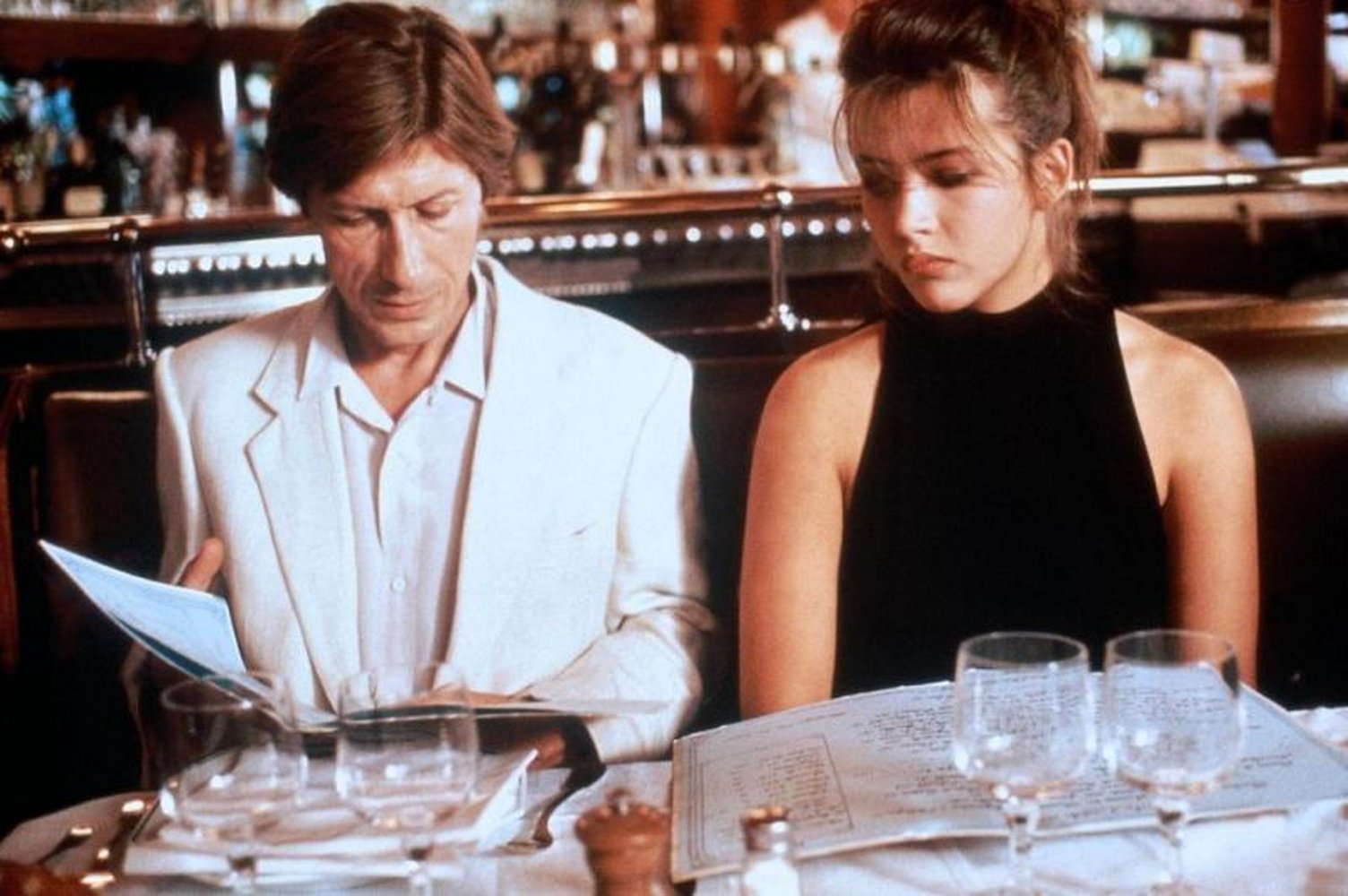
Mes nuits sont plus belles que vos jours (My Nights Are More Beautiful Than Your Days) is a 1989 French romantic drama directed by Andrzej Żuławski, based on the novel by Raphaële Billetdoux. The film stars Sophie Marceau and Jacques Dutronc in a surreal, emotionally charged love story that blends passion, poetry, and psychological intensity.
+
Plot and Themes
The film follows Lucas (Jacques Dutronc), a disillusioned computer programmer suffering from a degenerative brain condition, who meets Blanche (Sophie Marceau), a mysterious and alluring nightclub performer. Their relationship unfolds in a series of feverish encounters, blurring the lines between reality and hallucination. The narrative explores themes of existential despair, the fleeting nature of time, and the transformative power of love—all framed through Żuławski’s signature surrealist lens.
Visual and Stylistic Approach
Żuławski’s direction is marked by frenetic camera movements, vivid colors, and dreamlike sequences that mirror Lucas’s deteriorating mental state. The film’s aesthetic oscillates between raw sensuality and grotesque imagery, creating a disorienting yet hypnotic atmosphere. Scenes in Blanche’s neon-lit nightclub contrast sharply with the bleak, almost clinical spaces Lucas inhabits, symbolizing the clash between vitality and decay.
Sophie Marceau’s Performance
At just 22 years old, Sophie Marceau delivers a mesmerizing performance as Blanche, embodying both ethereal beauty and enigmatic danger. Her character serves as a muse and a tormentor, drawing Lucas into a world of ecstasy and oblivion. Marceau’s chemistry with Dutronc—whose portrayal of a man grappling with mortality is equally compelling—anchors the film’s emotional core.
Controversy and Reception
Upon release, the film polarized critics. Some praised its audacious style and emotional depth, while others dismissed it as overly melodramatic or self-indulgent. The explicit sexuality and psychological intensity divided audiences, though it has since gained a cult following as a quintessential example of late-1980s European arthouse cinema.
Legacy and Influence
While not as widely known as Żuławski’s Possession (1981), the film remains a fascinating artifact of his oeuvre, showcasing his talent for merging visceral emotion with avant-garde storytelling. Its exploration of love as both salvation and destruction resonates with fans of filmmakers like Luis Buñuel or David Lynch. For those drawn to unconventional romances, Mes nuits sont plus belles que vos jours offers a haunting, visually stunning experience.