

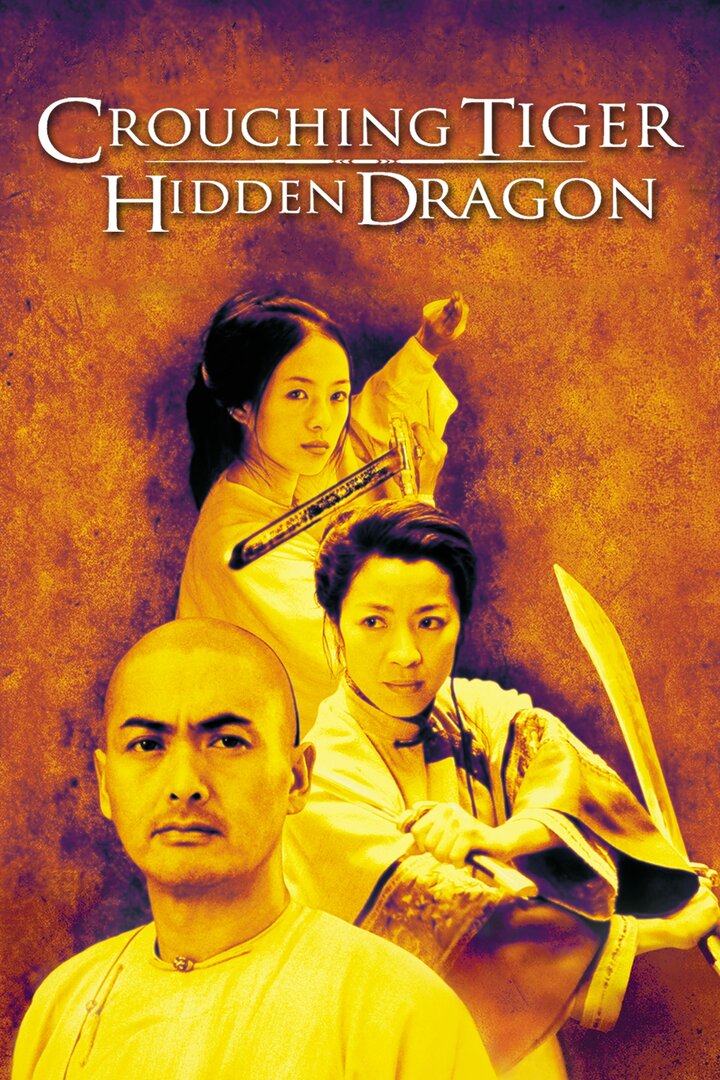
Crouching Tiger, Hidden Dragon (2000), directed by Ang Lee, occupies a singular place in world cinema, bridging classical Chinese wuxia traditions with a refined, international art-house sensibility. Set in Qing-dynasty China yet shaped by contemporary emotional concerns, the film transforms the martial arts epic into a lyrical meditation on desire, restraint, and spiritual longing. Its global success did not dilute its cultural specificity; rather, it revealed how deeply localized myths can resonate when rendered with formal elegance and emotional clarity.
At the heart of the film lies a web of unfulfilled desires, most poignantly embodied by Michelle Yeoh’s Yu Shu Lien and Chow Yun-fat’s Li Mu Bai. Their restrained performances convey a lifetime of devotion sacrificed to honor, duty, and unspoken love. Ang Lee treats silence as narrative force, allowing glances, pauses, and physical distance to express what dialogue cannot. In contrast, Zhang Ziyi’s Jen Yu introduces youthful defiance and volatility, a character torn between aristocratic confinement and the intoxicating freedom of the martial world. Her presence injects urgency into the film, positioning rebellion as both liberation and peril.
Visually, Crouching Tiger, Hidden Dragon achieves a rare balance between physical exhilaration and poetic abstraction. The gravity-defying combat sequences—choreographed by Yuen Woo-ping—are not displays of dominance but expressions of inner states. Fighters glide across rooftops, water surfaces, and bamboo forests as if momentarily freed from earthly burdens. Cinematographer Peter Pau’s luminous compositions elevate these moments into visual metaphor, where motion becomes a language of longing, and flight suggests the unattainable ideal of spiritual release.
Ang Lee’s approach to wuxia departs from heroic certainty, favoring introspection over conquest. Violence is portrayed as consequence rather than triumph, and mastery is inseparable from loneliness. The legendary Green Destiny sword, far from symbolizing power alone, becomes a catalyst for moral reckoning, exposing the limits of discipline and the cost of emotional repression. In this way, the film reframes genre expectations, using martial tradition as a vessel for philosophical inquiry rather than nationalist mythmaking.
Ultimately, Crouching Tiger, Hidden Dragon endures not because of its technical virtuosity alone, but because of its quiet emotional devastation. Its final moments reject spectacle in favor of ambiguity, suggesting that freedom may exist only briefly, if at all. Ang Lee’s film stands as a meditation on lives shaped by restraint, where true transcendence remains just beyond reach. In blending myth, movement, and melancholy, it achieves a rare cinematic grace—one that continues to float between cultures, genres, and generations.