

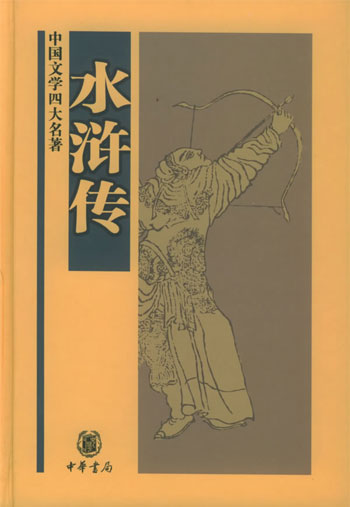
《水浒传》 (Shuǐhǔ Zhuàn), or Water Margin, attributed to 施耐庵 (Shī Nài’ān), is one of China’s Four Great Classical Novels. Written during the transition from the 元朝 (Yuán Cháo) to the 明朝 (Míng Cháo) around the late 14th century (approximately 1360–1370 CE), it circulated first in manuscript form before appearing in woodblock print editions in the early 15th century during the Ming period. The earliest surviving printed versions date to the 1520s, produced in the cultural centers of eastern 中国 (Zhōngguó), then under Ming rule.
This epic tale chronicles the exploits of 108 outlaws who gather at Liangshan Marsh to resist government corruption. Unlike conventional heroes, these bandits—ranging from military officers to commoners—are driven to criminality by systematic injustice. Shi Nai’an crafts a complex narrative that questions the boundary between lawful authority and moral righteousness. The novel’s structure interweaves individual origin stories, creating a tapestry of loyalty, vengeance, and survival against a backdrop of dynastic decline. Characters like the righteous Song Jiang, the fierce Wu Song, and the cunning Wu Yong have become archetypes in Chinese cultural memory.
The book offers sharp social commentary on the abuse of power, presenting rebellion as both heroic and tragically futile. While the outlaws form a brotherhood based on honor and mutual protection, their eventual decision to seek imperial amnesty leads to bitter consequences—highlighting the tension between personal integrity and institutional loyalty. The prose blends colloquial vitality with poetic interludes, though modern readers should note its episodic nature and archaic language reflect the storytelling traditions of medieval China.
Water Margin remains extraordinarily influential, pioneering the martial arts genre and inspiring adaptations across film, television, and gaming throughout East Asia. Its unflinching portrayal of violence and its occasionally problematic treatment of female characters reflect the values of its era. Nevertheless, as a product of 14th-century China, it provides invaluable insight into pre-modern Chinese society, legal systems, and popular resistance. For readers willing to navigate its complexity, 《水浒传》 offers a profound exploration of justice, leadership, and the costs of political compromise that transcends its historical origins.