

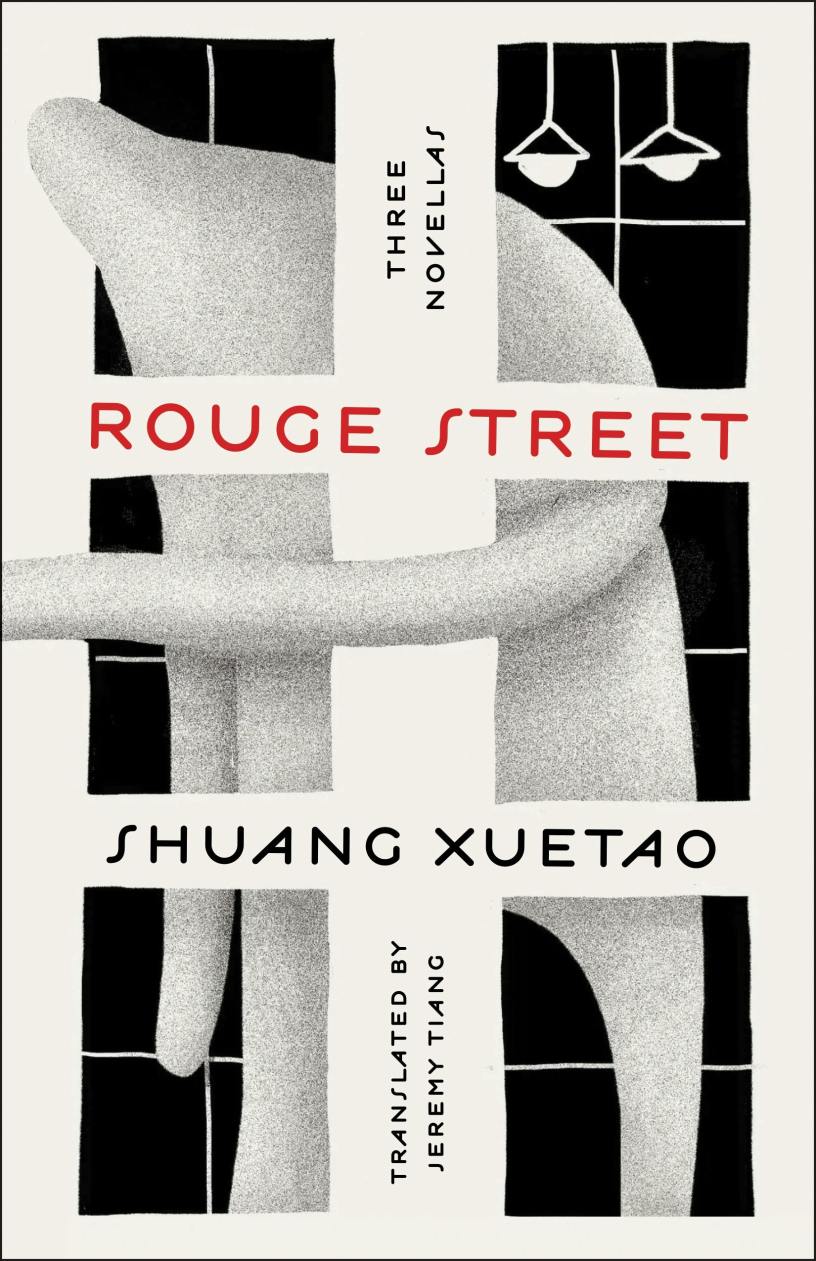
Shuang Xuetao’s Rouge Street: Three Novellas, translated with precision by Jeremy Tiang, emerges as a haunting portrait of post-industrial Shenyang, a city grappling with the scars of Mao’s Cultural Revolution and the disorienting shift to a market economy. Set on the titular Yanfen Street—a spiral-like, insular enclave populated by thieves, drunks, and marginalized souls—the collection intertwines three narratives that oscillate between gritty realism and surreal allegory. Xuetao, a recipient of China’s Blancpain-Imaginist Literary Prize, crafts stories steeped in melancholy, where characters navigate unemployment, poverty, and fractured familial bonds, yet cling to resilience and fleeting moments of grace. The street itself becomes a metaphor for stagnation and survival, its labyrinthine layout isolating inhabitants from the rapid modernization encroaching beyond its borders.
The first novella, The Aeronaut, traces the intertwined fates of two families across decades, beginning with Li Zhengdao’s rise and fall during the Cultural Revolution. His suicide, driven by persecution, casts a shadow over subsequent generations, including his son Mingqi, who marries Gao Likuan’s daughter out of pity and financial desperation. Xuetao deftly layers historical trauma onto personal grief, as Mingqi’s obsession with building a flying machine—a futile attempt to escape gravity—mirrors the collective yearning for redemption. The narrative shifts between past and present, blurring timelines to underscore how history’s weight lingers in the present, much like the frost that perpetually coats the city.
Bright Hall delves into the aftermath of the Revolution through the eyes of Zhang Mo, a schoolboy navigating a neighborhood where sculptors lose fingers to ideological purges and pious congregations gather in decaying worker’s homes. When Pastor Lin is murdered, Zhang and his cousin Gooseberry flee into a frozen lake, encountering vanished characters and mythical creatures in a dreamlike sequence. Xuetao employs magical realism to externalize internal turmoil, framing the lake as a liminal space where guilt and memory converge. The novella’s spiral structure reflects the cyclical nature of trauma, as characters repeat patterns of betrayal and redemption without escape.
The final novella, Moses on the Plain, shifts to a vigilante’s quest to assassinate corrupt officials, echoing Louis Cha’s martial arts antiheroes. The protagonist, a factory worker turned outlaw, embodies the rage of Northeasterners abandoned by the state, yet his actions are tempered by a rigid moral code—he refuses charity to preserve his dignity. Xuetao juxtaposes brutal violence with moments of absurd humor, as when a character quips, “If you have a big ass, you don’t need to take off your pants to prove it.” This directness, reminiscent of Hemingway, strips sentimentality from suffering, revealing characters’ essence through fleeting gestures or terse dialogue.
Critics have praised Xuetao’s ability to balance “hardscrabble naturalism with the transcendent” (Kirkus Reviews), noting his stories’ “lyrical, masterful” quality (Goodreads). The collection’s strength lies in its multiplicity of voices—children, elders, outcasts—each narrating fragments of a fractured whole. While some cultural nuances may elude Western readers, Tiang’s translation preserves the text’s rhythmic cadence, ensuring the emotional core remains intact. Xuetao’s Shenyang, though specific in its geography, resonates universally as a microcosm of human struggle, where hope flickers amidst decay.
Rouge Street is a triumph of atmospheric storytelling, a mosaic of lives suspended between despair and defiance. Xuetao’s prose, at once sparse and evocative, captures the paradox of a city “as beautifully frigid and gritty” as its inhabitants (Literary Hub). By excavating the psyche of those left behind by progress, he offers a searing critique of modernity’s costs, while affirming the enduring power of community and memory. This collection cements Xuetao’s place as a vital voice in contemporary literature, bridging China’s past and future with unflinching honesty.