

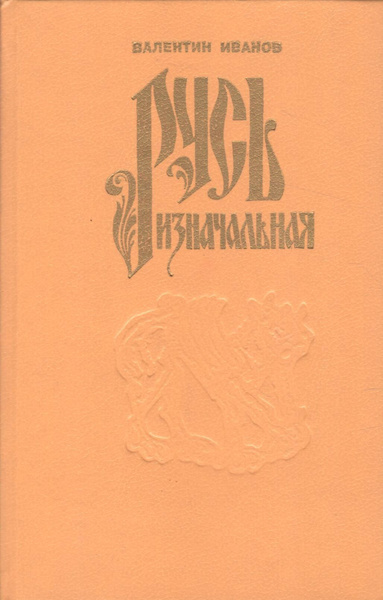
Valentin Ivanov’s Rus of Old is a cinematic, high-stakes reimagining of the 6th century, a time when the Slavic tribes—then known as the Antes—were emerging as a formidable force on the fringes of the dying Roman world. Unlike the Primary Chronicle, which begins with the Rurikids, Ivanov goes deeper into the “primordial” past. He crafts a world where the forest and the steppe are the primary characters, shaping the hardy, communal, and fierce nature of the early Slavs. It is less a dry history and more an ideological epic about the birth of a people.
The heart of the novel lies in the character of Ratibor and his journey from a tribal warrior to a leader capable of uniting fragmented clans. Ivanov excels at depicting the “Antian” lifestyle—their pagan rituals, their democratic veche (assemblies), and their deep connection to the land. There is a palpable sense of “Slavic pride” throughout the text; Ivanov portrays these early tribes not as barbarians, but as a free-spirited people whose collective will acts as a shield against the encroaching pressures of both the nomadic Khazars and the decadent Byzantine Empire.
The contrast between the “pure” Slavs and the “corrupt” Byzantium is a central theme. Ivanov spends a significant amount of time in Constantinople, depicting it as a place of intricate intrigue, religious dogmatism, and social decay. By contrasting the vibrant, albeit raw, energy of the Slavic tribes with the cynical maneuvering of the Romans, he makes a clear argument: the future of Europe didn’t lie with the old empires, but with the rising “young” nations of the North.
Stylistically, the book is written in a dense, slightly archaic prose that aims to mimic the weight of ancient speech. It can be a bit of a slow burn for modern readers used to snappy pacing, but for those who enjoy world-building, it is incredibly rewarding. Ivanov doesn’t just describe a battle; he describes the smell of the leather, the weight of the axe, and the specific tactical maneuvers of 6th-century warfare. He was an engineer by trade, and that technical precision often bleeds into his descriptions of fortifications and siege engines.
It is important to note that Ivanov’s work is heavily influenced by the “anti-Normanist” school of thought. He was keen to prove that the Slavs were a sophisticated, self-sufficient culture long before any Vikings or outsiders arrived to “bring order.” While modern historians might find some of his romanticized portrayals a bit exaggerated, the book serves as a fascinating look at how the Soviet intelligentsia of the 1960s viewed their own ethnogenesis. It is as much a reflection of the era it was written in as it is of the era it describes.
Ultimately, Rus of Old is a foundational text for Russian historical fiction. It provided a mythological backbone for the national consciousness, turning “pre-history” into a heroic age. It’s a book about the struggle for survival and the realization that unity is the only defense against extinction—a theme that resonates throughout the rest of Russian history. If the Chronicle is the skeleton of the Russian story, Ivanov’s novel is the muscle and the blood.