

Mikhail Ptashuk
Mikhail Nikolayevich Ptashuk (1943–2002) was a prominent Soviet and Belarusian film director, celebrated for his profound impact on Belarusian cinema. He was born on January 28, 1943, in the village of Fedyuki, Lyakhovichi District, Brest Region, in what was then occupied Belarus. His early years, shaped by the hardships of wartime and post‑war life, later informed the depth and emotional resonance of his films.
Ptashuk pursued his artistic education in Moscow. In 1967, he graduated from the B. V. Shchukin Theatre Institute, where he honed his craft as an actor and director. He further developed his cinematic vision at the Higher Directing Courses of Goskino USSR, studying under the renowned filmmaker Georgiy Daneliya. He completed his studies there in 1972.
Career highlights and major works
Ptashuk’s directorial career spanned nearly three decades, from 1973 to 2002. He made his debut with About Vitya, About Masha, and the Marine Infantry (1973), which also marked the screen debut of actor Aleksandr Abdulov. Over the years, he established himself as a master storyteller, often adapting works by Belarusian literary classics.
Among his most acclaimed films are:
- Take My Pain (1980), based on a novel by Ivan Shamyakin;
- The Black Castle of Olshanski (1984), an adaptation of a novel by Uladzimir Karatkevich;
- Sign of Trouble (1986), based on Vasil Bykov’s novella — this film won international acclaim;
- Our Armored Train (1989);
- Cooperative ‘Politburo’, or Goodbye Will Be Long (1992);
- Game of Imagination (1995);
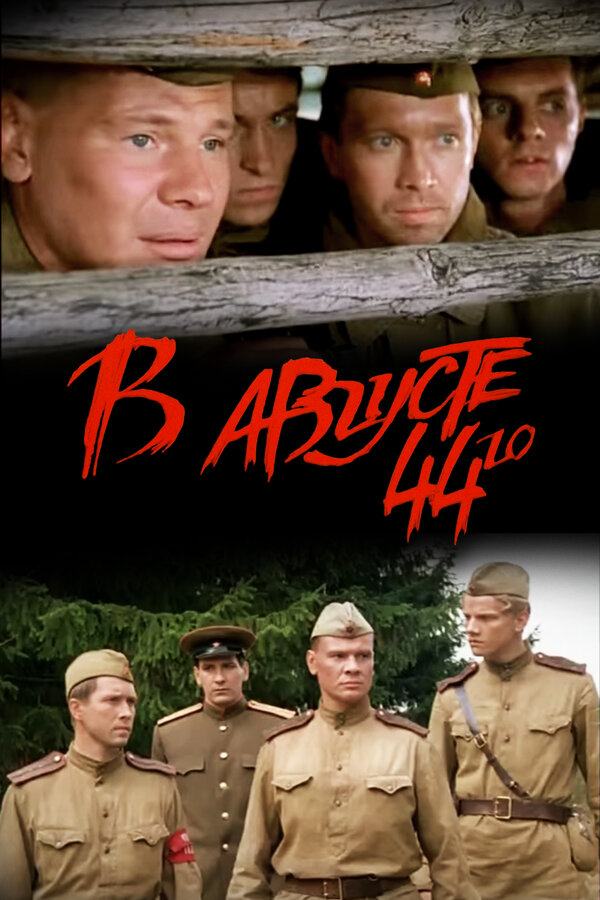
- In August of ’44… (2000), a wartime thriller that became one of his most popular works;
- In June of ’41 (released posthumously in 2003), where he also served as screenwriter.
In 1989, Ptashuk founded the Belarusian Independent Studio under the Union of Cinematographers and served as its artistic director, fostering new talent and creative freedom in Belarusian filmmaking.
Recognition and awards
Ptashuk received numerous accolades that reflected both national and international recognition of his work. He was named a Merited Artist of the Byelorussian SSR in 1982 and a People’s Artist of the Byelorussian SSR in 1990.
His awards include:
- Lenin Komsomol Prize (1980) for Time Chose Us;
- State Prize of the Byelorussian SSR (1982) for Take My Pain;
- Grand Prize “Statue of Freedom” at the Sopot International Film Festival (1986) for Sign of Trouble;
- BBC International Prize (1987) for Sign of Trouble;
- Grand Prix at the Stockholm International Film Festival (1993) for Cooperative ‘Politburo’;
- “Golden Vityaz” Prize at the International Film Festival of Slavic and Orthodox Peoples (1994);
- “Silver Listapad” at the Minsk International Film Festival Listapad (2000) for In August of ’44…;
- Grand Prix at the “Golden Vityaz” International Film Festival (2001);
- Prize at the Sochi Open Russian Film Festival (2001) for In August of ’44….
Legacy and tragic end
Mikhail Ptashuk left an indelible mark on Belarusian and Soviet cinema. He brought Belarusian literature to the screen with sensitivity and cinematic power, exploring themes of war, morality, and national identity. His films combined psychological depth with strong visual storytelling, earning him respect both at home and abroad.
Tragically, Ptashuk died in a car accident on April 26, 2002, in Moscow, on his way to attend the Nika Awards ceremony. He was buried in Minsk at the Eastern Cemetery. Despite his untimely death, his legacy lives on: his films continue to be studied, screened, and celebrated, inspiring new generations of filmmakers and resonating with audiences who appreciate cinema that speaks to the soul.
