

The 1927 German silent film Metropolis, directed by Fritz Lang, remains a landmark in cinematic history, blending striking visual artistry with a dystopian narrative that critiques the socio-economic divides of the early 20th century. Its depiction of a hyper-industrialized future, where the elite live in opulence above the city and the working class toils in subterranean misery, offers a prescient commentary on class struggle and technological dehumanization. The film’s use of elaborate sets, such as the towering skyscrapers and the labyrinthine underground zones, showcases Lang’s visionary approach to world-building, though some critics argue that the production’s grandeur occasionally overshadows its thematic depth.
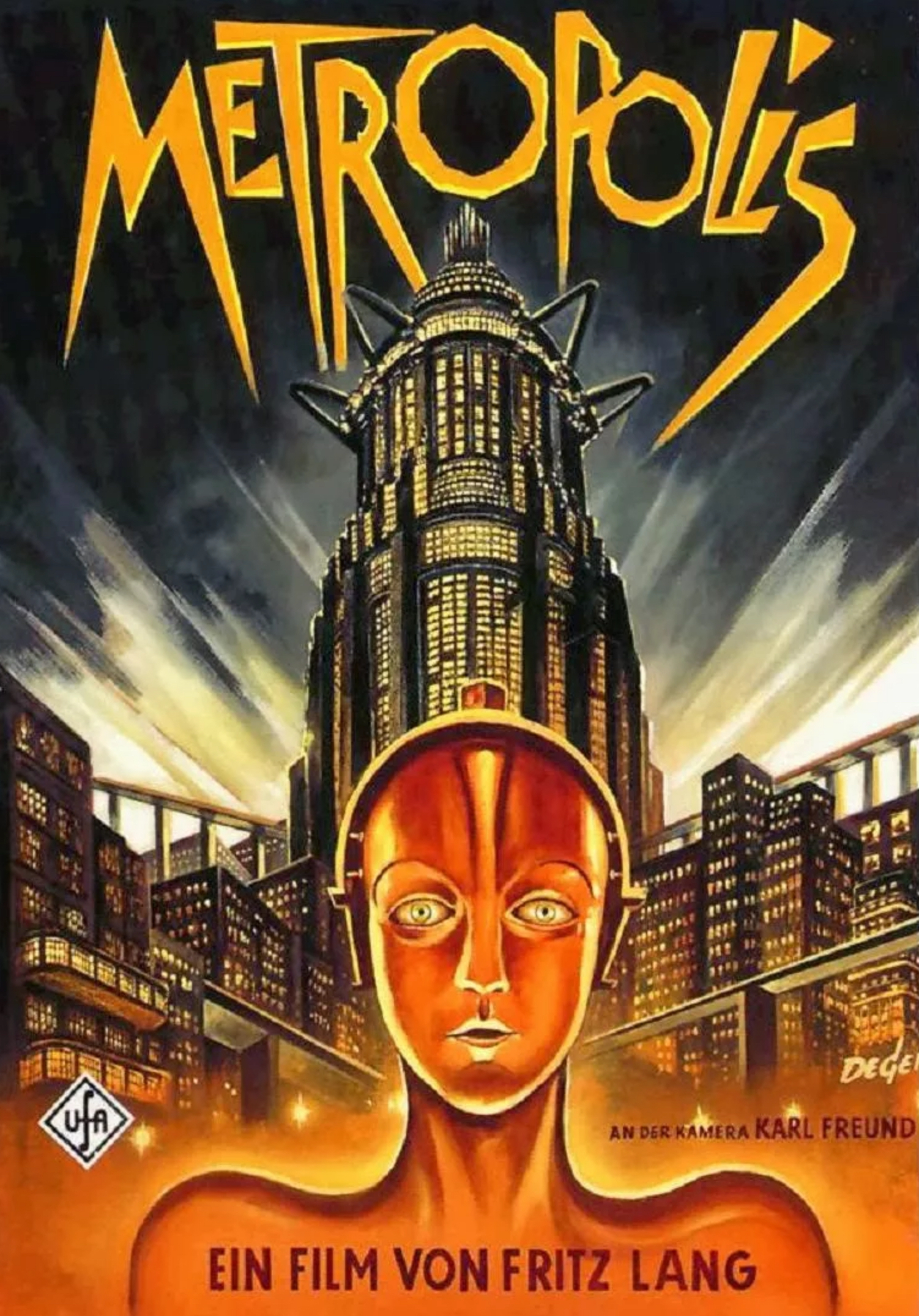
The 1927 German silent film Metropolis, directed by Fritz Lang, remains a landmark in cinematic history, blending striking visual artistry with a dystopian narrative that critiques the socio-economic divides of the early 20th century. Its depiction of a hyper-industrialized future, where the elite live in opulence above the city and the working class toils in subterranean misery, offers a prescient commentary on class struggle and technological dehumanization. The film’s use of elaborate sets, such as the towering skyscrapers and the labyrinthine underground zones, showcases Lang’s visionary approach to world-building, though some critics argue that the production’s grandeur occasionally overshadows its thematic depth.
The film’s narrative, while ambitious, has been critiqued for its uneven pacing and reliance on melodrama. The protagonist, Freder, a member of the upper class, undergoes a transformation after encountering Maria, a worker who symbolizes the hopes of the oppressed. Their relationship, however, is often reduced to a simplistic love story, diluting the film’s potential to explore more nuanced social dynamics. The character of the robot Maria, a mechanical doppelgänger created by the antagonist, Dr. Rotwang, introduces a sci-fi element that, while visually arresting, has been interpreted as a metaphor for the dangers of unchecked technological advancement and the manipulation of human emotions.
Cinematographically, Metropolis is a groundbreaking achievement. The use of chiaroscuro lighting, stark contrasts between light and shadow, and innovative camera angles create a haunting atmosphere that amplifies the film’s themes of alienation and control. The iconic scene of the robot’s unveiling, with its dramatic reveal and mechanical movements, exemplifies the film’s ability to merge spectacle with storytelling. However, some scholars argue that the film’s reliance on visual symbolism over dialogue limits its emotional resonance, particularly for modern audiences unfamiliar with the silent film era’s conventions.
The film’s score, composed by Gottfried Hummelt, plays a crucial role in conveying mood and tension. While the absence of spoken dialogue might seem a drawback, the music compensates by enhancing the emotional weight of key scenes, such as the workers’ revolt and the climax in the cathedral. This auditory layering, though minimal, underscores the film’s emphasis on the power of collective action against oppressive systems.
Thematically, Metropolis explores the tension between industrial progress and human dignity, a concern that remains relevant today. The film’s portrayal of a society divided by class and controlled by a technocratic elite resonates with contemporary debates about automation, inequality, and the role of technology in shaping social hierarchies. However, some critics argue that the film’s message is overly didactic, with its moralistic undertones occasionally overshadowing the complexity of its characters.
The film’s influence on later science fiction and dystopian narratives is undeniable. It has inspired countless works, from Blade Runner to The Matrix, and its visual motifs have become staples of the genre. Yet, its originality has sometimes been overshadowed by its successors, leading to debates about whether it is more of a foundational text than a fully realized masterpiece.
Culturally, Metropolis has endured as a symbol of Weimar-era modernity, reflecting the era’s anxieties about capitalism, labor, and the rise of fascism. Its portrayal of a mechanized society, where humans are both tools and subjects of control, mirrors the political and economic turbulence of 1920s Germany. However, the film’s political allegories have been interpreted in various ways, with some viewing it as a critique of capitalism and others as a cautionary tale about the dangers of unchecked industrialization.
Despite its flaws, Metropolis remains a seminal work that bridges the gap between early cinema and the modernist sensibilities of the 20th century. Its legacy is not only in its visual and narrative innovations but also in its enduring relevance as a commentary on power, technology, and human agency. The film’s ability to provoke thought and inspire artistic reinterpretation ensures its place in the canon of world cinema.
In conclusion, Metropolis is a complex and ambitious film that, while imperfect, continues to captivate audiences with its bold vision and timeless themes. Its exploration of class struggle, technological dystopia, and the human condition remains as pertinent today as it was nearly a century ago. Though it may not achieve the same level of narrative cohesion as some of its successors, its influence on the evolution of cinema and its role as a cultural touchstone are unquestionable.