

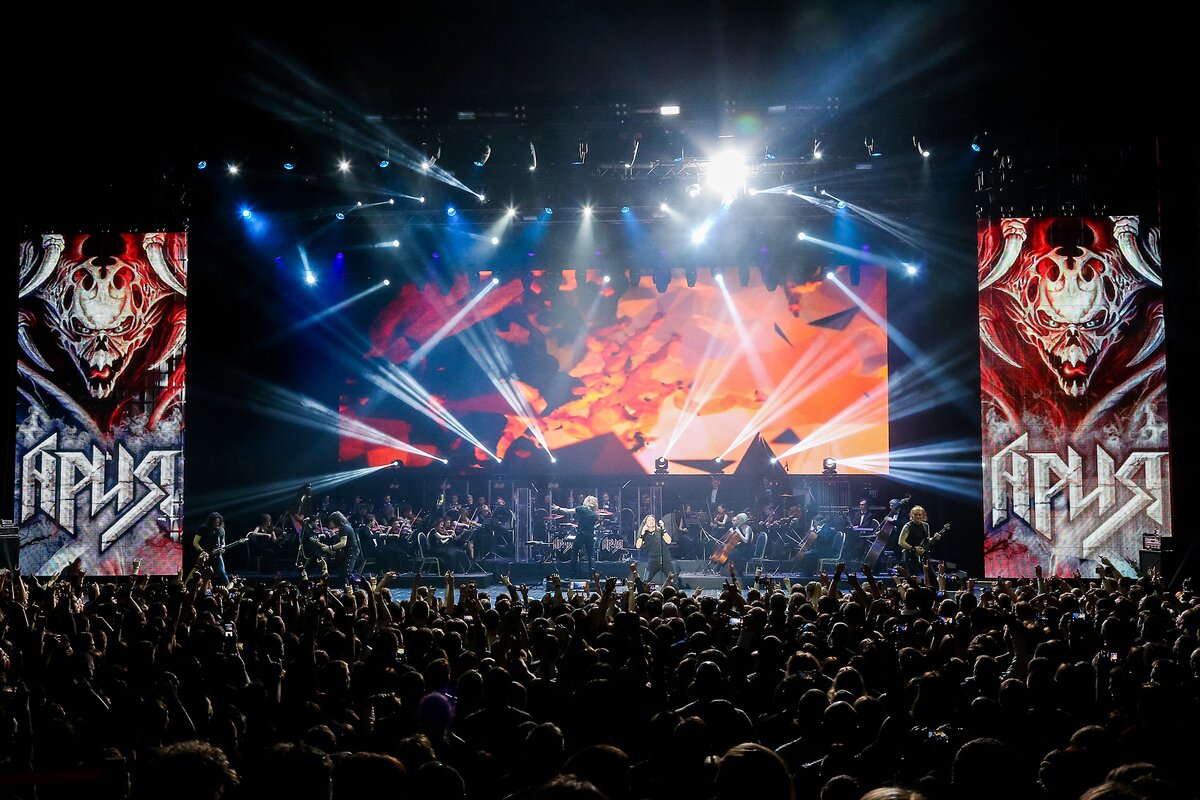
After the collapse of the Soviet Union in 1991, Russian rock music entered a transformative period that saw both continuity with Soviet-era traditions and bold experimentation with Western influences. Many Soviet rock bands, such as DDT, Nautilus Pompilius, and Mashina Vremeni, remained popular, providing a bridge between the underground rock movement of the 1980s and the new commercial possibilities of the post-Soviet era.
The 1990s brought unprecedented creative freedom, allowing artists to explore themes and sounds that had been previously censored or discouraged. In 1996, the recording company Moroz started releasing the highly popular series “Legends of Russian Rock,” helping to codify and celebrate the genre’s rich history while new radio stations like Nashe Radio emerged to promote contemporary Russian rock artists.
The Gothic and post-punk sounds that emerged in the 1990s found their most prominent expression through bands like Agata Kristi, who became one of Russia’s most popular rock acts during this decade. Their sound, represented a darker, more introspective side of Russian rock that contrasted with the more optimistic folk-rock traditions of earlier Soviet bands.
This period also saw the rise of alternative rock acts like Splean, formed in Moscow in 1993, who helped establish a distinctly Russian alternative sound that would influence countless bands in the following decades. These groups demonstrated how Russian rock could absorb international influences while maintaining its own cultural identity and linguistic authenticity.
The late 1990s and early 2000s witnessed the rise of a new generation of Russian rock artists who skillfully blended Western pop-rock sensibilities with distinctly Russian musical and lyrical elements. The western pop-rock sound was introduced by Ilya Lagoutenko’s Mumiy Troll, who made their records in the UK under the guidance of UK producers, pioneering what became known as “rockapops” – a more accessible, energetic style that appealed to younger audiences.
Artists like Zemfira emerged during this period, offering a fresh perspective that combined introspective lyrics with contemporary rock arrangements. This generation of musicians understood how to navigate the global music marketplace while preserving the poetic depth and emotional intensity that had always characterized Russian rock.
The popularity of Russian rock was further boosted by its integration into popular culture, particularly through influential films like “Brother” (1997) and its sequel, which featured soundtracks dominated by Russian rock artists and introduced the genre to a broader audience. These films not only showcased the music but also captured the zeitgeist of 1990s Russia, with rock music serving as both soundtrack and cultural commentary on the rapidly changing society. Television music programs, radio stations, and emerging music festivals created new platforms for rock artists to reach audiences, while the gradual development of a music industry infrastructure allowed for better production, distribution, and promotion of Russian rock albums.
The 2000s brought both opportunities and challenges as the Russian music industry became increasingly commercialized and integrated with global markets. Established acts from the 1990s continued to evolve and maintain their popularity, while new bands emerged that pushed the boundaries of what Russian rock could be.
The period saw greater genre diversification, with some bands exploring heavier metal sounds, others embracing electronic elements, and still others developing more experimental approaches to songwriting and performance. The growing influence of the internet began to change how music was distributed and discovered, allowing smaller acts to build followings without traditional industry support.
The 2010s marked the beginning of what some observers have called a “Russian new wave,” characterized by a generation of young musicians in Moscow and Saint Petersburg who were shaped by the underground indie scene. This movement represented a departure from the established Russian rock traditions, incorporating influences from international indie rock, post-punk revival, and experimental music. Bands from this era often sang in both Russian and English, reflecting their global orientation while maintaining connections to Russian cultural themes. The scene was notable for its DIY ethos and rejection of the increasingly corporate nature of mainstream Russian popular music.
Political tensions have continued to influence the Russian rock scene throughout the post-Soviet period, with artists often finding themselves navigating between artistic expression and political pressures. These political divisions reflected broader tensions within Russian society and demonstrated how rock music continued to serve as a venue for political and social commentar
The rise of streaming platforms and social media in the late 2010s and early 2020s fundamentally altered how Russian rock music is created, distributed, and consumed. Young artists gained unprecedented access to global audiences while also facing increased competition from international acts. The traditional album format gave way to singles and playlists, forcing established artists to adapt their creative processes and promotional strategies.
Meanwhile, newer acts embraced digital-native approaches to building fan bases, often incorporating visual elements, social media presence, and cross-platform content creation as integral parts of their artistic identity rather than mere promotional tools.
Contemporary Russian rock of the 2020s reflects the complex realities of a generation that has grown up entirely in post-Soviet Russia, with artists addressing themes of globalization, digital culture, urban alienation, and political uncertainty through their music. The scene has become increasingly diverse, encompassing everything from nostalgic revival acts that pay homage to 1980s Soviet rock to experimental groups pushing the boundaries of genre definition.
International recognition has grown for certain Russian rock acts, though geopolitical tensions have complicated touring and collaboration opportunities, creating a tension between artistic ambition and practical limitations.
The evolution of Russian rock since 1991 reflects the broader cultural tensions of a nation reimagining itself after decades of Soviet rule, with music serving as both an outlet for nostalgia and a vehicle for contemporary expression. The genre has maintained its character as a form of artistic and sometimes political resistance while adapting to changing technological, economic, and social conditions.
As Russia continues to navigate its complex relationship with both its Soviet past and the global present, rock music remains a vital space for exploring questions of identity, authenticity, and artistic freedom. The ongoing development of the genre suggests that Russian rock will continue to evolve, incorporating new influences while preserving the lyrical depth, emotional intensity, and cultural specificity that have defined it for over three decades.