

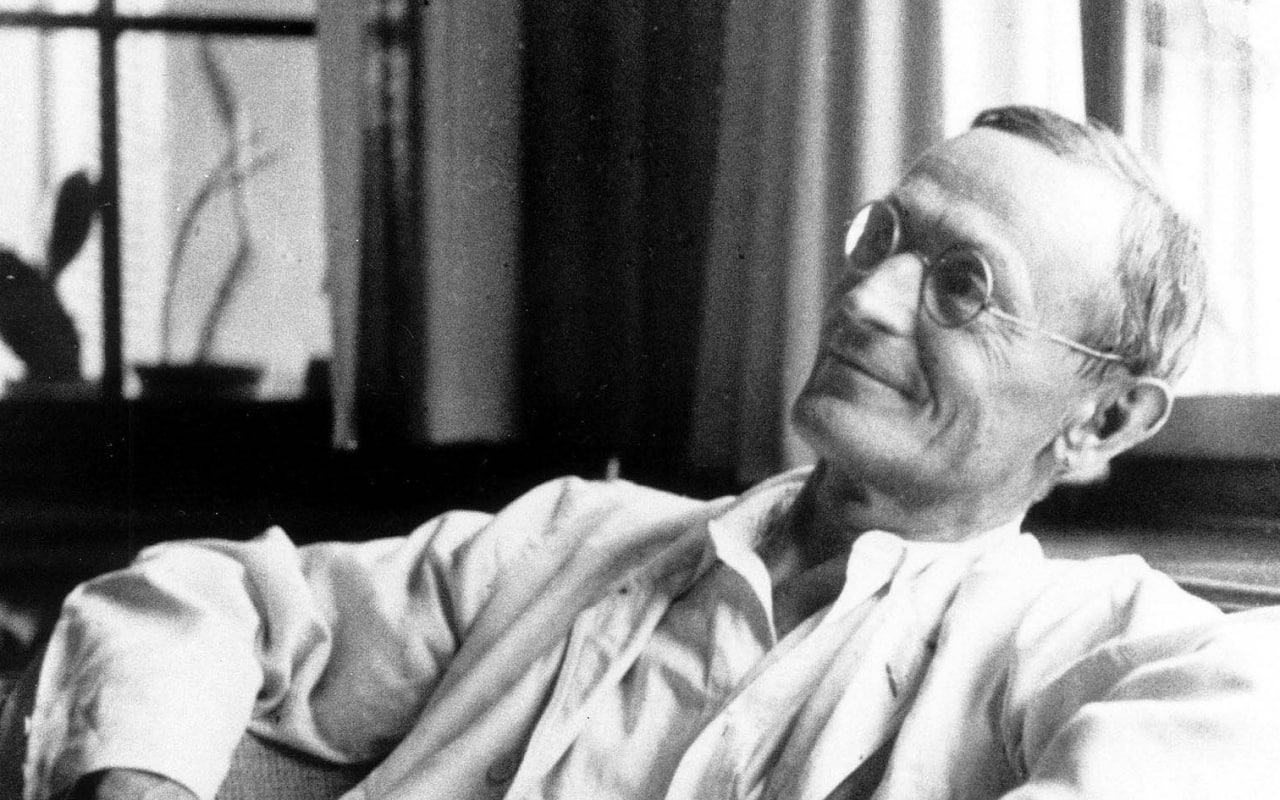
Hermann Hesse was born on July 2, 1877, in the small town of Calw, German Empire, into a family of missionaries and theologians. His parents, Johannes and Marie Hesse, were deeply religious Pietists, and their strict upbringing profoundly influenced young Hermann. However, he rebelled against this rigid environment, displaying an early passion for literature, poetry, and philosophy.
Hesse’s academic journey was turbulent. He attended the Maulbronn Seminary, a Protestant boarding school, but fled after a year, declaring he would rather be “a poet or nothing at all.” His struggles with depression and suicidal thoughts led to stays in mental institutions, experiences that later shaped his writing. Despite these challenges, he worked as a bookseller and began writing in his spare time.
Hesse’s first novel, “Peter Camenzind” (1904), brought him critical acclaim. The story of a young artist’s search for meaning reflected his own spiritual quest. This success allowed him to focus entirely on writing, and he soon published more works, including “Beneath the Wheel” (1906), a semi-autobiographical critique of oppressive education systems.
The outbreak of World War I deeply affected Hesse. Though initially patriotic, he soon became a vocal pacifist, condemning nationalism in essays and aiding prisoners of war. His stance alienated many, including former friends. During this time, he underwent psychoanalysis with a disciple of Carl Jung, which influenced his later works.
Hesse moved to Switzerland in 1912, before the start of the war, eventually becoming a Swiss citizen. There, he embraced a more solitary life, studying Eastern philosophy, painting, and gardening. This period marked a shift toward deeper introspection, leading to masterpieces like “Demian” (1919), published under a pseudonym, which explored self-discovery and Jungian psychology.
Hesse’s fascination with Eastern spirituality culminated in “Siddhartha”, a novel about a man’s journey toward enlightenment in ancient India. The book, blending Buddhist and Hindu thought with Western individualism, became a global classic, especially beloved by countercultural movements in the 1960s.
In 1927, Hesse published “Steppenwolf”, a dark, surreal exploration of a man torn between his civilized self and wild, untamed instincts. The novel’s themes of alienation and spiritual crisis resonated with readers in post-war Europe, cementing Hesse’s reputation as a writer of profound psychological depth.
Hesse’s final major work, “The Glass Bead Game”, won him the Nobel Prize in Literature in 1946. Set in a futuristic intellectual utopia, the novel examines the tension between scholarly detachment and lived experience. It remains one of his most complex and philosophical works.
After World War II, Hesse withdrew from public life, focusing on his correspondence with readers. He died on August 9, 1962, in Montagnola, Switzerland. His works, once controversial, became cornerstones of 20th-century literature, inspiring generations with their themes of self-discovery, spirituality, and resistance to conformity.
Today, Hesse is celebrated as a bridge between Eastern and Western thought. His books remain bestsellers worldwide, appealing to seekers of wisdom and lovers of introspective fiction. From the hippie movement to modern mindfulness advocates, his legacy endures as a guide for those navigating life’s deepest questions. Hermann Hesse’s life was as much a spiritual journey as his novels. Through his struggles and insights, he crafted timeless stories that continue to illuminate the human soul.
Discover more about Hermann Hesse in our knowledge node.