


The musical scene in Germany after World War II was particularly fascinating due to the political division and divergent approaches to modernism in East and West Germany.
In East Germany, composers faced unique challenges due to the state’s emphasis on socialist realism. Paul Dessau and Hanns Eisler were prominent figures who sought to balance contemporary techniques with political expectations. Their compositions often incorporated elements of workers’ songs and folk music, while still exploring innovative compositional methods.
In West Germany, composers such as Karlheinz Stockhausen emerged as prominent figures in the avant-garde movement, particularly through their work at the WDR Electronic Music Studio in Cologne. Their serial and electronic compositions helped shape the new musical landscape in the post-war era. Other notable figures included Hans Werner Henze, who later relocated to Italy due to the conservative political climate, and Bernd Alois Zimmermann.
The Democratic Republic of Germany
The composers of the German Democratic Republic (GDR), also known as East Germany from 1949 to 1990, made a unique contribution to the musical landscape shaped by political ideology, isolation and aspirations. These artists reflected these circumstances in their compositions, ranging from state-sanctioned socialist realism to avant-garde experiments quietly challenging the status quo. After the reunification of Germany, many of these musicians moved on to more diverse and less constrained careers, gaining international recognition.
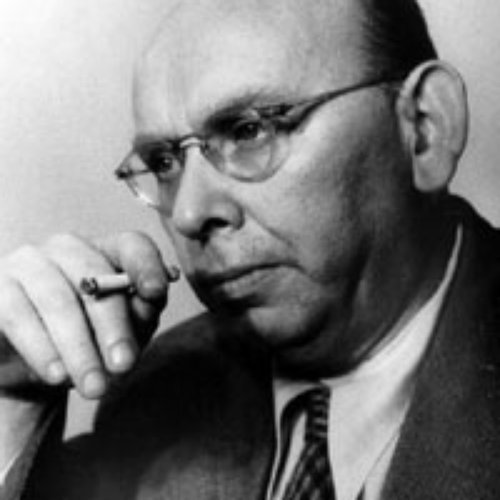
Hanns Eisler (1898-1962), a prominent figure in East German music history, was a student of Arnold Schoenberg and merged twelve-tone techniques with politically engaged compositions. His works, including the national anthem of the German Democratic Republic (“Auferstanden aus Ruinen”) and socialist songs and cantatas, had a profound impact. He collaborated with Bertolt Brecht on “Die Maßnahme” (1930), setting the tone for state-sponsored music in the GDR.

Paul Dessau (1894-1979) returned from exile in America to contribute to East German cultural life. His operas like “The Condemnation of Lukullus” (1949) showcased a fusion of modernistic idioms and socialist themes. He also composed symphonies, chamber works and politically charged choral pieces. Dessau combined atonality with lyricism, often using dissonance and satire to address social issues.
Kurt Schwaen (1909-2007) was a versatile composer producing works ranging from operas and symphonies to children’s music and labour songs. His music emphasized clarity and simplicity aligned with socialist realism. Notable works include the opera “Leonce und Lena” (1979) and numerous chamber pieces. Schwaen aimed to make music accessible without compromising artistic integrity, bridging the gap between professional and amateur musicians.
Reiner Bredemeyer (1929-1995) was known for his experimental avant-garde compositions despite operating in a controlled artistic environment. He embraced modernist techniques, integrating irony and collage elements into his compositions like the cantata “Phaedra” and numerous orchestral and chamber pieces. Bredemeyer prioritized personal expression and exploration over socialist realism.
Georg Katzer (1935-2019) was one of the leading avant-garde figures in East Germany. He studied in Berlin and Prague, pioneering electronic music in the region. His works like “Sinfonia delle Cose Silenziose” and experimental electronic compositions like “Rondo” also included operas and multimedia pieces. Katzer’s willingness to push boundaries made him a bridge between East German modernism and wider European avant-garde.
Friedrich Goldmann (1941-2009) was a composer and conductor known for his orchestral and chamber compositions. He studied with Karlheinz Stockhausen and developed a reputation for serialism and abstract forms. Goldmann composed works like the Concerto for Orchestra and String Quartet No. 1 that explored abstract forms and serialism. His career transcended East German borders, and his influence continues in contemporary European music.
Ruth Zechlin (1926-2007) was a prolific female composer in East German history. Her repertoire encompassed orchestral, chamber and choral works. Notable pieces include “Orgelmusik” (organ music), “Medea” (opera) and chamber pieces. Her style evolved from neoclassicism to experimentation and avant-gardism. Zechlin opened doors for women in the field, pioneering her own path.
Following the fall of the Berlin Wall in 1989, East German composers gained new opportunities to engage wider audiences and explore diverse artistic landscapes. Many like Katzer and Goldmann achieved international recognition. Younger artists like Enno Poppe and Johannes Kreidler continue to be inspired by this legacy of experimentation in united Germany without ideological constraints.
The Federal Republic of Germany
In the aftermath of the Second World War, when West Germany emerged as an independent nation, a new wave of composers appeared on the musical scene. These artists brought a fresh perspective and innovative approach to the world of classical music, breaking away from the constraints of serialism.
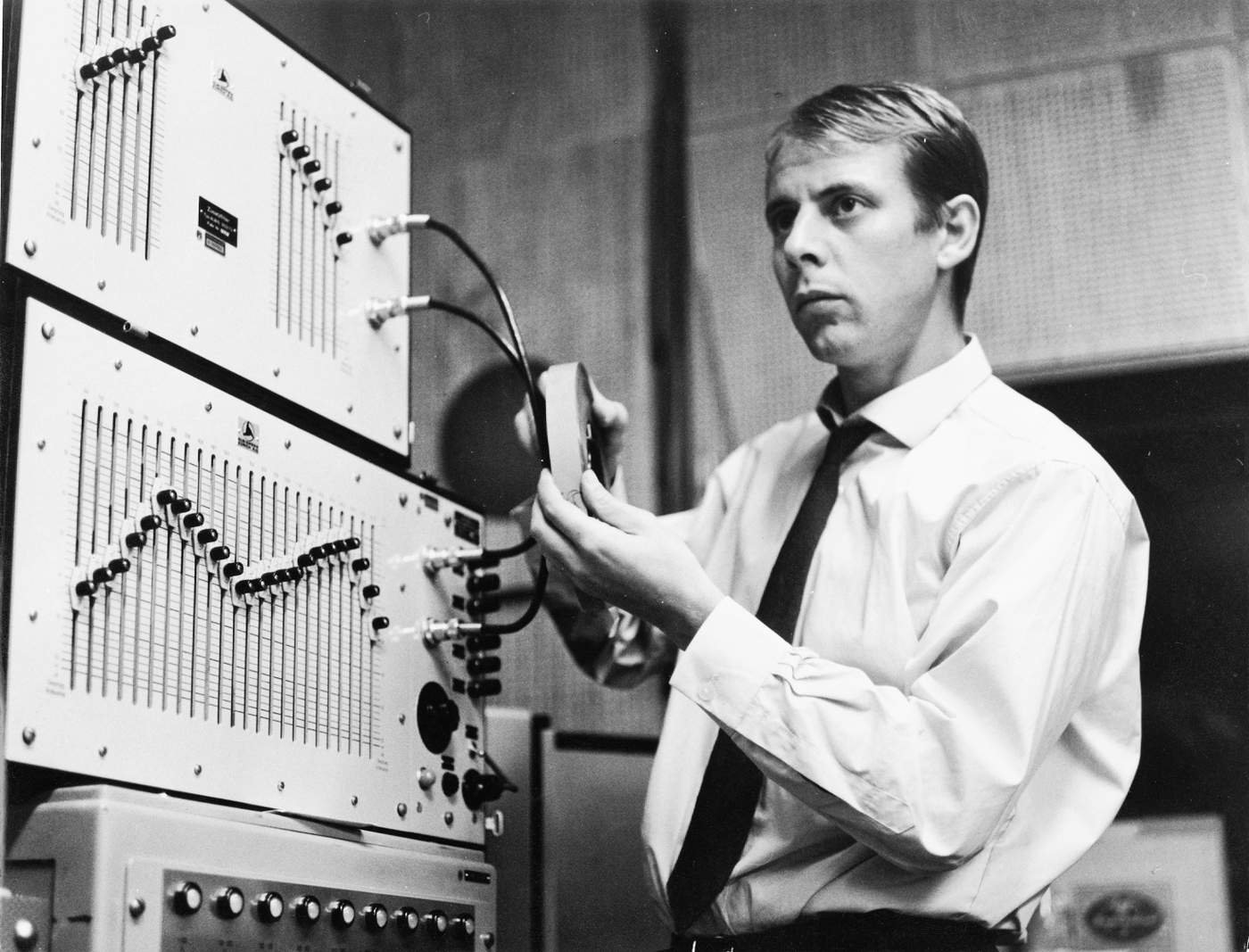
One of the most prominent figures of this generation was Karlheinz Stockhausen, born in 1928 and passing away in 2007. Stockhausen was a trailblazer in the field of electronic music and serial composition. His works such as «Gesang der Jünglinge» and «Gruppen» explored the possibilities of spatialized sound. His opera «Licht», spanning seven days, delved into musical and spiritual realms.
Hans Werner Henze, born in 1926 and passing in 2012, was another prominent figure in this era. Henze’s compositions reflected his left-leaning beliefs and rejection of strict serialism. His operas «The Bassarids» and «Elegy for Young Lovers», along with his symphonies and chamber pieces, are renowned for their profound depth and complexity.
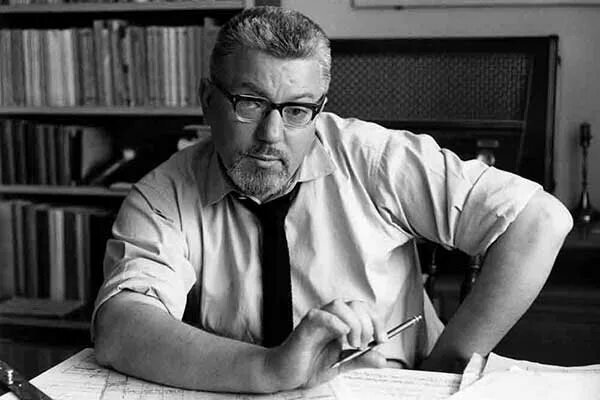
Bernd Alois Zimmermann, born in 1918 and departing in 1970, integrated diverse musical styles in his works. His opera «Die Soldaten», along with orchestral pieces like «Photoptosis», showcased his eclectic musical approach.

Helmut Lachenmann, born in 1935, stood at the forefront of the musique concrète movement that challenged conventional notions of musical sound. His works like the opera «Das Mädchen mit den Schwefelhölzern» explored innovative techniques.
Wolfgang Rihm, born in 1952, rejected rigid serialism in favor of emotional directness. His compositions, such as the opera «Jacob Lenz», combined modernist rigor with lyrical expression.
Aribert Reimann, born in 1936, created operas known for their psychological depth and complex musical language. His «Lear» and «Medea», along with chamber music and vocal pieces, demonstrate his mastery in vocal composition.
These composers, along with others like Mauricio Kagel, Dieter Schnebel and Enno Poppe, continued to shape the contemporary musical landscape, blending traditional elements with innovative ideas. The post-reunification period saw the continuation of this trend, with composers such as Jörg Widmann pushing the boundaries of musical possibilities.
Institutions like the Darmstadt Summer Courses for New Music and the WDR Electronic Studio played a crucial role in nurturing these composers. Their works reflected the cultural climate of post-war West Germany and their influence extended far beyond their home country.
Post unification German composers
The post-reunification period in Germany has witnessed the emergence of a new generation of composers, each bringing their unique vision and style to the musical landscape. These artists have been influenced by both Western and Eastern cultural traditions, resulting in a diverse range of musical expressions that reflect the complexity of contemporary society.
Rihm, Goebbels, Widmann, Poppe, Saunders, Eggert, Abrahamsen, and Chin are among the most notable figures in this new era of German music. Their works span a wide range of styles, from experimentalism and minimalism to neoromanticism, all reflecting their individual approaches to composition.
One of the most striking aspects of this period is the integration of technology and multimedia, which has opened up new possibilities for composers. Enno Poppe and Heiner Goebbels are two prominent examples of this trend, exploring the use of electronic sounds and algorithmic processes in their compositions.
Another notable aspect is the increasing interest in cultural diversity and global perspectives. Composers such as Unsuk Chin have brought international influences to German music, enriching the country’s musical heritage with new perspectives and ideas.
Themes of history, memory, identity, and cultural collision are also prominent in the post-reunification repertoire. These themes reflect the complex history of Germany and its ongoing role in the global community.
Bibliography
Books and Monographs:
- Adlington, Robert.Sound Commitments: Avant-Garde Music and the Sixties. Oxford University Press, 2009.
- Altenburg, Detlef G.Musikgeschichte Deutschlands im 20. Jahrhundert. Laaber-Verlag, 2016.
- Cook, Nicholas, and Anthony Pople.The Cambridge History of Twentieth-Century Music. Cambridge University Press, 2004.
- Fanning, David.The Oxford Handbook of Modern German Music. Oxford University Press, 2021.
- Ross, Alex.The Rest Is Noise: Listening to the Twentieth Century. Picador, 2007.
- Röder, Wolfgang.Die Neue Musik nach 1945: Entwicklungen und Tendenzen. Bärenreiter, 1996.
Articles and Journals:
- Borio, Gianmario. “Postwar Music and the Political-Aesthetic Debate.” Twentieth-Century Music Journal, vol. 2, no. 2, 2005, pp. 123–140.
- Fox, Christopher. “New Complexity and the German Tradition.” Tempo, vol. 58, no. 230, 2004, pp. 10–18.
- Griffiths, Paul. “The Reinvention of the Symphony in Post-War Germany.” Modern Music Journal, vol. 72, no. 3.
- Stenzl, Jürg. “The Darmstadt School: A European Phenomenon.” Contemporary Music Review, vol. 12, no. 1, 1995, pp. 7–32.
- Whittall, Arnold. “Serialism and After: Innovation in Post-War German Music.” Musical Times, vol. 143, no. 1878, 2002, pp. 6–14.