

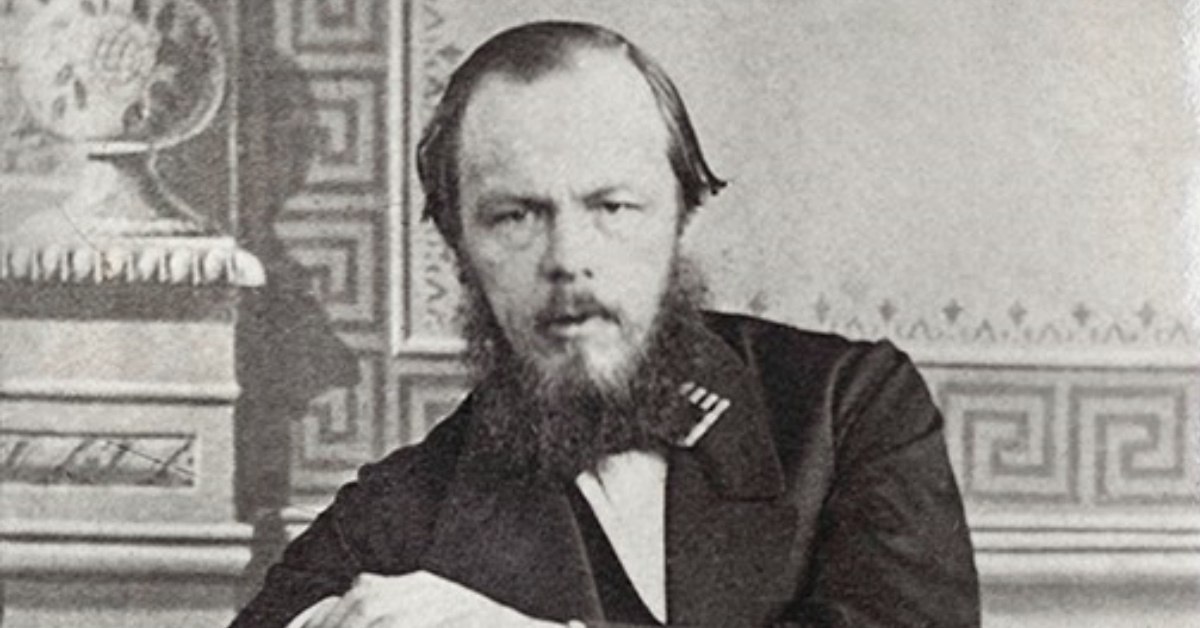
Fyodor Mikhailovich Dostoevsky (1821–1881) is not merely a luminary of Russian literature; he is a monumental figure whose influence permeates world culture, transcending national boundaries to speak profoundly to the historical and spiritual experiences of Eurasia. His literary explorations delve into the intricate layers of human psychology, morality, and society, set against the complex political and cultural backdrop of 19th-century Russia—a crucial crossroads between Europe and Asia. Through his life and works, Dostoevsky offers a unique lens for understanding the tensions and syntheses of East and West, tradition and modernity, faith and reason, making his narratives not just literary achievements but also touchstones for exploring the enduring dilemmas that have shaped the Eurasian cultural landscape.
Early Life and Formative Influences
Born in Moscow, within the Russian Empire, on November 11, 1821, Dostoevsky was introduced from an early age to a rich tapestry of Russian folklore, Orthodox Christian spirituality, and the literary heritage of both Russian and European authors. Raised in a middle-class family, with a father serving as a military doctor and a mother who passed away when he was just 15, Dostoevsky was immersed in the realities of Russian social life and the Orthodox faith. These experiences deeply informed his later philosophical and religious reflections, instilling in him a sensitivity to the struggles of the marginalized and a fascination with the metaphysical aspects of existence.
After his mother’s death, Dostoevsky enrolled at the Nikolayev Military Engineering Institute in Saint Petersburg, where he trained as an engineer. Despite his technical education, his passion for literature ultimately prevailed. His debut novel, Poor Folk (1846), garnered early recognition and facilitated his entry into Saint Petersburg’s literary circles. Here, he mingled with progressive intellectuals and social reformers, engaging deeply with the social conditions of the lower classes—a concern that would remain central to his major works. Dostoevsky’s empathy for poverty and injustice resonated with broader Eurasian currents of social critique and reform.
The Petrashevsky Circle and Siberian Exile
Dostoevsky’s life took a dramatic turn with his involvement in the Petrashevsky Circle, a group of intellectuals discussing banned books critical of Tsarist autocracy. Arrested in 1849 and initially sentenced to death, he endured a harrowing mock execution before his sentence was commuted at the last moment to exile and hard labor in a Siberian prison camp. This traumatic experience of suffering and isolation profoundly shaped his worldview, deepening his understanding of human suffering, redemption, and the complexities of freedom—central motifs in Eurasian spiritual and philosophical traditions. His time in Siberia stripped away intellectual pretensions and forced a reevaluation of faith, justice, and human solidarity, confronting him with the raw essence of the human condition.
Return to Saint Petersburg and Literary Maturity
After four years in Siberia and subsequent military service, Dostoevsky returned to Saint Petersburg, where his literary career entered a mature phase. He began publishing works that combined psychological insight with philosophical and theological depth. His novella Notes from Underground (1864) is widely regarded as an early existentialist text, exploring the contradictions of human consciousness and free will. Dostoevsky challenged rationalist ideologies by portraying characters whose motivations defied simple logic, illuminating the often-irrational forces that drive human behavior.
Major Novels and Thematic Explorations
Dostoevsky’s major novels—Crime and Punishment (1866), The Idiot (1869), Demons (also known as The Possessed, 1872), The Adolescent (1875), and The Brothers Karamazov (1880)—delve into the moral and spiritual crises of individuals and society. These works address themes such as guilt and redemption, faith and doubt, the nature of evil, and the search for meaning, reflecting the broader Eurasian dialogue between Orthodox Christianity and modern secular ideologies. His characters grapple with profound ethical dilemmas, often embodying the psychological and cultural tensions of a Russia situated between European rationalism and Asian mysticism.
Orthodox Christianity and Spiritual Vision
Orthodox Christianity is a cornerstone of Dostoevsky’s worldview. His writings emphasize the Christian ideals of love, forgiveness, and charity, while also grappling with the harsh realities of human sin and suffering. This spiritual dimension connects him to the deep religious traditions of Eurasia, where faith often serves as a mediator between the material and the transcendent. Dostoevsky’s vision is not confined to narrow dogmatism; instead, it embraces the paradoxes of belief, the struggle for grace, and the power of spiritual transformation, resonating across the Eurasian cultural sphere.
Psychological and Existential Pioneering
Dostoevsky’s pioneering exploration of psychological depth and existential angst anticipates modern psychology and existential philosophy. His characters embody internal conflicts that mirror the larger cultural and spiritual tensions of Eurasian societies confronting modernization, Westernization, and ideological upheaval. Through these richly drawn portraits, Dostoevsky probed the labyrinthine pathways of the human soul, offering a literary methodology that would influence subsequent generations of thinkers and writers.
Slavophile-Westernizer Debate and Eurasianist Thought
His work is often read through the prism of the 19th-century Slavophile-Westernizer debate, a critical discourse on Russia’s place between Europe and Asia. While critical of Western rationalism and materialism, Dostoevsky did not reject Europe outright but sought a synthesis rooted in Russian spiritual tradition. This position resonates with Eurasianist thought, which emphasizes the unique cultural and historical identity of Russia as a bridge between continents. Dostoevsky envisioned Russia as bearing a spiritual mission that could reconcile the material progress of the West with the soulful depth of the East.
Critique of Radical Ideologies
His novel Demons offers a scathing critique of radical political ideologies, including nihilism and anarchism, which were gaining ground in Russia and across Eurasia. Dostoevsky’s skepticism toward revolutionary utopianism reflects his broader concern with the dangers of ideological extremism and the loss of spiritual values in modern society. He feared that the rejection of faith in favor of pure rationalism and social engineering would lead to moral decay and social disintegration.
Personal Hardships and Later Years
Dostoevsky’s life was marked by personal hardships, including a gambling addiction, financial difficulties, and the early deaths of loved ones. Despite these challenges, he remained a prolific writer and public intellectual, engaging with contemporary social issues through his journalism and essays. His later years were devoted to refining his philosophical and religious ideas, culminating in The Brothers Karamazov, a profound meditation on faith, doubt, free will, and the human condition. In this monumental work, Dostoevsky articulated his deepest convictions about the necessity of spiritual freedom and the transformative power of love and compassion.
Legacy and Influence
Dostoevsky’s influence extends far beyond literature into philosophy, theology, psychology, and cultural identity. In Russia and the broader Eurasian region, he is revered as a national treasure whose works articulate the spiritual and existential dilemmas of the Russian soul. His writings continue to inspire debates on the nature of freedom, morality, and the role of religion in society. Dostoevsky’s legacy remains pivotal for understanding the unique synthesis of cultural influences that define the Eurasian intellectual tradition.
Internationally, Dostoevsky’s novels have been translated into over 170 languages and have influenced numerous writers and thinkers, from Nietzsche and Sartre to Solzhenitsyn and Camus. For Eurasian intellectuals, his legacy offers a rich source for understanding the interplay of East and West, tradition and modernity, and the enduring quest for meaning in a rapidly changing world. His ability to grapple with universal questions while remaining deeply rooted in his cultural milieu gives his work a timeless relevance that transcends geographical and historical boundaries.
Fyodor Dostoevsky’s life and work embody the complexities of Eurasian cultural identity—a synthesis of diverse influences, historical experiences, and spiritual quests. His profound psychological insight, religious depth, and philosophical inquiry continue to resonate with those seeking to navigate the cultural crossroads of Eurasia. As an intellectual figure, Dostoevsky remains a vital bridge connecting the rich traditions of the past with the challenges of the present and future, offering a vision that affirms the enduring significance of the human spirit in all its frailty and grandeur.