

Andrei Konchalovsky
Andrei Konchalovsky is a distinguished Russian filmmaker, screenwriter, and stage director whose career spans over six decades and two continents. Born Andrei Sergeyevich Mikhalkov in Moscow in 1937, he emerged from a prominent Soviet artistic dynasty; his father was the poet Sergey Mikhalkov, and his brother is the acclaimed director Nikita Mikhalkov. Although he originally trained as a pianist at the Moscow Conservatory, Konchalovsky shifted his focus to cinema in the late 1950s, enrolling at the State Institute of Cinematography (VGIK). There, he studied under the legendary Mikhail Romm and formed a pivotal creative partnership with classmate Andrei Tarkovsky, co-writing the screenplay for the masterpiece Andrei Rublev.
Konchalovsky’s early directorial work in the Soviet Union established him as a master of atmospheric realism and literary adaptation. His debut feature, The First Teacher (1965), drew international acclaim for its stark portrayal of post-revolutionary Kyrgyzstan. He followed this with celebrated adaptations of Russian classics, such as Turgenev’s A Nest of Gentlefolk (1969) and Chekhov’s Uncle Vanya (1970). His Soviet period culminated in the monumental Siberiade (1979), a multi-generational epic that won the Grand Prix at the Cannes Film Festival and paved the way for his transition to Western filmmaking.
In the 1980s, Konchalovsky moved to the United States, becoming one of the few Soviet directors to find commercial and critical success within the Hollywood studio system. His American filmography is characterized by a surprising versatility, ranging from the gritty, philosophical action thriller Runaway Train (1985)—which earned multiple Academy Award nominations—to the mainstream buddy-cop film Tango & Cash (1989). Despite the industrial pressures of Hollywood, Konchalovsky maintained an auteurist sensibility, often focusing on marginalized characters and the visceral struggle for survival, both physical and existential.
Following his return to Russia in the 1990s, Konchalovsky’s work entered a more introspective and experimental phase. He began to oscillate between large-scale international co-productions and intimate, documentary-style dramas. Films such as House of Fools (2002), set in a psychiatric hospital during the Chechen War, and The Postman’s White Nights (2014), which featured a non-professional cast in a remote village, demonstrate his enduring preoccupation with the intersection of individual lives and grand historical forces. These later works earned him repeated honors at the Venice Film Festival, solidifying his status as a persistent force in world cinema.
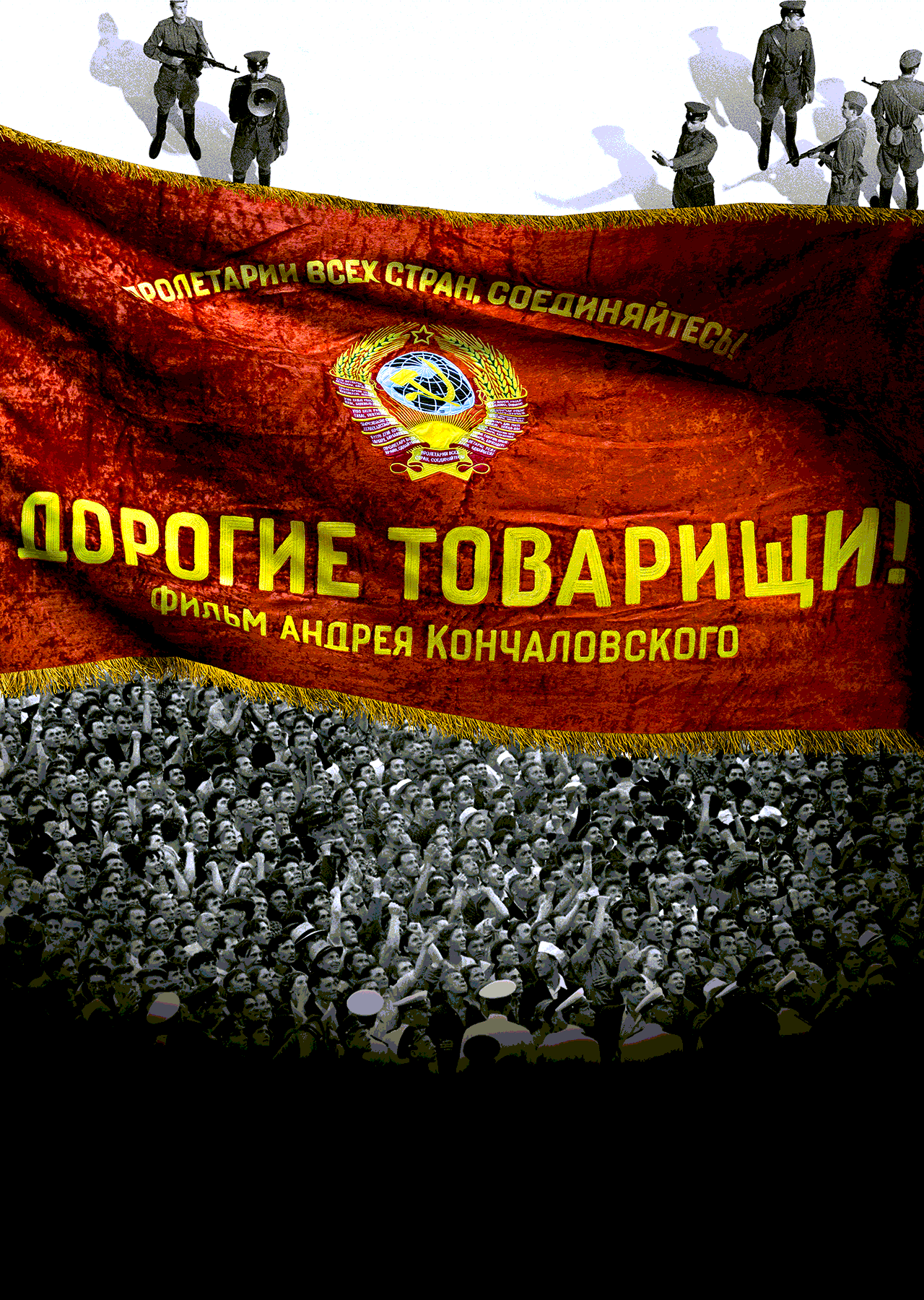
In recent years, Konchalovsky has increasingly turned his attention to historical reconstruction and the complexities of the Russian identity. His 2020 film Dear Comrades!, a monochrome depiction of the 1962 Novocherkassk massacre, was lauded for its clinical precision and its unflinching look at Soviet authoritarianism. Parallel to his cinematic output, he has maintained a prolific career in theater and opera, directing acclaimed productions across Europe, including works by Chekhov, Shakespeare, and Verdi. This multidisciplinary approach reflects his belief that art must remain a rigorous inquiry into the human condition.
The legacy of Andrei Konchalovsky is defined by a remarkable intellectual fluidity. He has successfully navigated the ideological constraints of the Soviet era, the commercial demands of Hollywood, and the shifting political landscape of contemporary Russia. While his style has evolved from classical lyricism to a more austere, "contemplative" realism, his central theme remains consistent: the search for spiritual and social truth within a chaotic world. Today, he remains an active and influential figure, bridging the gap between the traditions of the 19th-century intelligentsia and the complexities of the 21st-century global stage.
2020
