
Ernst Hans Josef Gombrich - Eurasia Baike
☕ 请捐助少量资金支持我们的工作 | Support our work with a small donation:
Author

Ernst Hans Josef Gombrich

Ernst Hans Josef Gombrich (March 30, 1909 – November 3, 2001) was a British art historian, cultural theorist, and scholar whose interdisciplinary work bridged art history, psychology, and cultural studies. Born in Vienna to a family with deep intellectual and artistic roots—his mother was a pianist and his father a lawyer—Gombrich studied art history at the University of Vienna under Julius von Schlosser and archaeologist Emanuel Löwy. His early exposure to Vienna’s cosmopolitan intellectual circles, including friendships with philosopher Karl Popper and musicologist Ernst Kris, shaped his later interdisciplinary approach. In 1936, he fled Nazi-occupied Austria for England, where he joined the Warburg Institute in London, becoming a pivotal figure in the postwar revival of art historical scholarship.

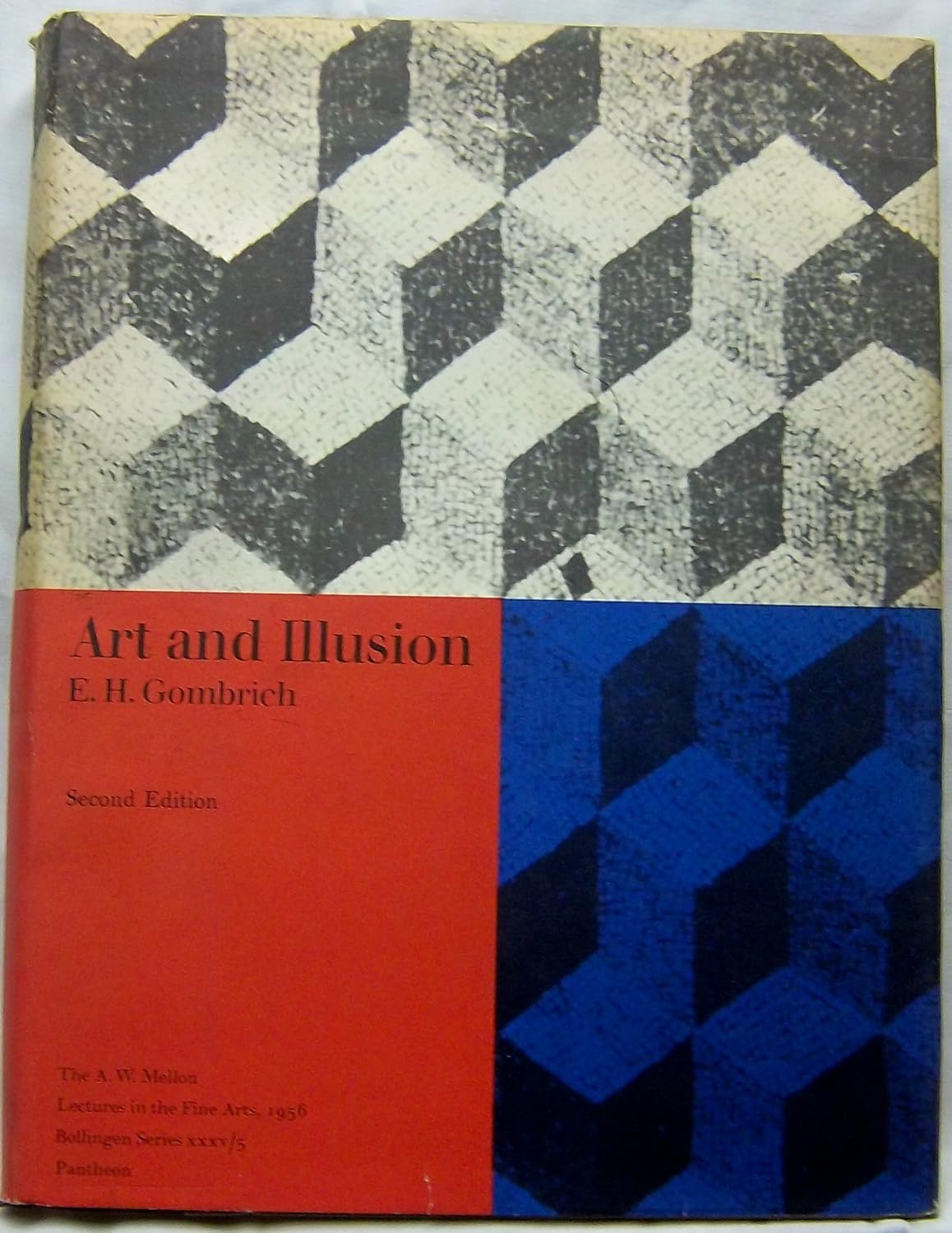
Gombrich’s magnum opus, The Story of Art (1950), revolutionized art history by presenting a global narrative accessible to general readers. Translated into over 40 languages with millions of copies sold, it remains a foundational text for introducing art’s evolution from prehistory to the modern era. His methodology emphasized contextual analysis, rejecting rigid periodization in favor of fluid cultural exchanges. The book’s success cemented his reputation as a master communicator, blending rigorous scholarship with lucid prose. He later expanded his focus to the psychology of perception in Art and Illusion (1960), which explored how artists represent reality through schemata and correction, drawing on Gestalt psychology and information theory. This work positioned him as a pioneer in applying cognitive science to art interpretation.

As director of the Warburg Institute (1956–1976) and Professor of the History of the Classical Tradition at London University, Gombrich cultivated a collaborative, cross-disciplinary environment. He mentored scholars like Michael Baxandall and Joseph Albers, fostering innovations in visual culture studies. His lectures and essays, collected in volumes such as Norm and Form (1966) and Symbolic Images (1972), tackled topics ranging from Renaissance iconography to the sociology of taste. He challenged elitist notions of art, arguing in The Sense of Order (1979) that aesthetic preferences are shaped by universal psychological patterns, from symmetry to abstraction. His 1990 dialogue with philosopher Didier Eribon, A Lifelong Interest, further illuminated his belief in art history’s role in preserving cultural memory.

Gombrich’s honors included a British knighthood (1972), the W.H. Smith Literary Award (1964), and the Erasmus Prize (1975). He held visiting professorships at Harvard, Oxford, and Cornell, and delivered influential lectures worldwide, including the 1965 Andrew W. Mellon Lectures at the National Gallery of Art, Washington, D.C. His later works, such as The Preference for the Primitive (2002), critiqued modernism’s ideological underpinnings while defending art’s capacity for meaningful communication. Despite his global influence, he remained humble, often quoting his motto: “There is no art without by-art.”

A polyglot fluent in German, English, Italian, and French, Gombrich engaged with non-Western traditions, notably Chinese and Islamic art. His 1930 essay “The Possibilities of Translating a Chinese Poem into German” reflected early interest in cross-cultural aesthetics, later deepened through friendships with musicians like Gustav Mahler and scholars such as Li Weining. After World War II, he advocated for reintegrating displaced cultural artifacts into public collections, aligning with the Warburg Institute’s mission to combat cultural amnesia. His 2008 memorial library at the China Academy of Art in Hangzhou, housing over 5,000 volumes, underscores his enduring legacy in Asia.

Gombrich’s critique of abstract art’s dogmatism, as seen in his 1978 essay “No Art Without Context,” revealed his skepticism toward movements prioritizing theory over perception. He argued that art’s vitality lies in its ability to engage viewers through shared visual language, a stance that influenced New Criticism and reception theory. His 1996 essay “The Absence of Style” further dissected how ideological agendas distort art historical narratives, advocating for empirical rigor over abstraction.

Ernst Gombrich died in London at age 92, leaving behind a legacy as a humanist scholar who democratized art history. His insistence on art’s communicative power and cultural interconnectedness continues to inspire generations of students and scholars. As the Times Literary Supplement noted, he “taught us to see the world—and its art—with fresh eyes,” ensuring his place as a towering figure in 20th-century intellectual history.