

A Turning Point in Jung’s Work
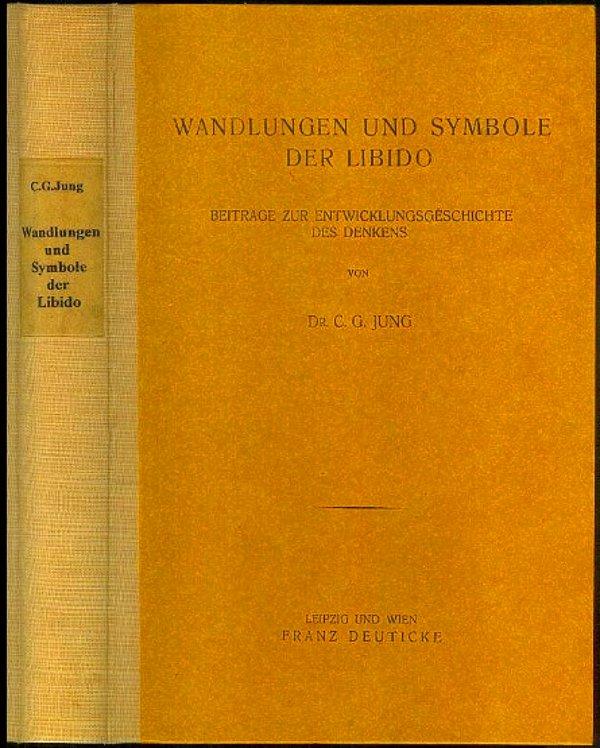
Symbols of Transformation is one of Carl Jung’s most important books. First published in 1912 under the title Wandlungen und Symbole der Libido, it marked a decisive break with Sigmund Freud and laid the foundation for Jung’s own school of analytical psychology. The book was extensively revised and republished in 1952 with its current title. For anyone wanting to understand how Jung developed his ideas about the unconscious, mythology, and psychological transformation, this is the place to start.
The Split with Freud
Before this book, Jung was Freud’s chosen successor. But Symbols of Transformation showed that Jung’s thinking was moving in a different direction. Freud saw the unconscious primarily as a storehouse of repressed sexual desires. Jung, however, began to argue that the energy behind human behavior—what he called libido—was not limited to sexuality. It was a broader, more creative life force. This disagreement caused a painful rift between the two men, but it also freed Jung to explore the human psyche on his own terms.
What the Book Is About
The book takes the form of a deep analysis of the fantasies of a young American woman named Frank Miller. Miss Miller was not Jung’s patient; she had published her fantasies and dreams in a book. Jung used her material as a springboard to explore how the human mind naturally produces symbols that mirror ancient myths. He argued that her fantasies were not personal delusions but expressions of universal psychological patterns.
Libido as Life Energy
One of the book’s central innovations is Jung’s redefinition of libido. Instead of viewing it as sexual energy, he described it as a general psychic energy that manifests in hunger, sexuality, creativity, and spiritual striving. This energy can flow into different activities and can become stuck or repressed. When it is blocked, it often finds expression in symbolic images—what Jung called “the transformation of the libido.” This shift allowed Jung to see myths, rituals, and art as natural expressions of the psyche’s ongoing energy flow.
The Collective Unconscious Emerges
Although Jung had not yet fully coined the term “collective unconscious” in the first edition, Symbols of Transformation contains the seeds of that idea. He noticed that Miss Miller’s fantasies contained images and themes that appeared in ancient myths, fairy tales, and religious traditions from cultures she had never encountered. He concluded that the human psyche must have a deeper layer—inherited, universal, and shared by all humanity. This insight became the cornerstone of his later work.
Mythological Parallels
The book is filled with rich comparisons between modern fantasies and ancient symbols. Jung draws on the myths of heroes such as Siegfried, Gilgamesh, and Hercules; he examines the symbolism of the sun, the serpent, sacrifice, and rebirth. He shows how a young woman’s daydreams about heroic figures and romantic adventures echo age‑old stories of the hero’s journey. For Jung, this was proof that mythology is not simply outdated superstition but a living language of the psyche.
The Hero and Transformation
A major theme in Symbols of Transformation is the hero myth. Jung saw the hero as a symbol of the conscious mind’s struggle to separate from the unconscious—a process that happens in childhood and repeats throughout life. The hero’s battles with monsters, his descent into darkness, and his eventual rebirth represent the psychological work of individuation, or becoming a whole person. The book shows that transformation often involves a “death” of old attitudes followed by a new kind of life.
Influence and Reception
When Symbols of Transformation first appeared, it caused a stir. Freud felt Jung had abandoned the foundations of psychoanalysis. But over time, the book came to be recognized as a landmark in psychology. It inspired generations of scholars in mythology, literature, and religious studies. Joseph Campbell, author of The Hero with a Thousand Faces, acknowledged Jung’s influence. The book also laid the groundwork for Jung’s later explorations of alchemy, dream analysis, and the process of individuation.
Reading the Book Today
Let me be honest: Symbols of Transformation is not an easy read. Jung writes in a dense, scholarly style and assumes his audience is familiar with mythology, classical literature, and early psychoanalysis. The 1952 edition includes extensive footnotes and revisions that can feel overwhelming. But for readers willing to take their time, the book rewards patience. It helps to have a basic understanding of Jung’s later concepts—such as archetypes and the collective unconscious—before diving in. Many readers find it helpful to read it alongside a guide or a biography of Jung.
Why It Still Matters
More than a century after its first publication, Symbols of Transformation remains a vital work. It invites us to see our personal dreams, fantasies, and struggles as connected to the larger story of humanity. It suggests that the images arising from our unconscious are not random but meaningful—they are nature’s way of guiding us toward growth. Whether you are a student of psychology, a lover of myths, or someone exploring your own inner life, this book offers a profound perspective on how we transform. It is not merely a text from the past; it is a living companion for anyone on a journey of self‑discovery.