
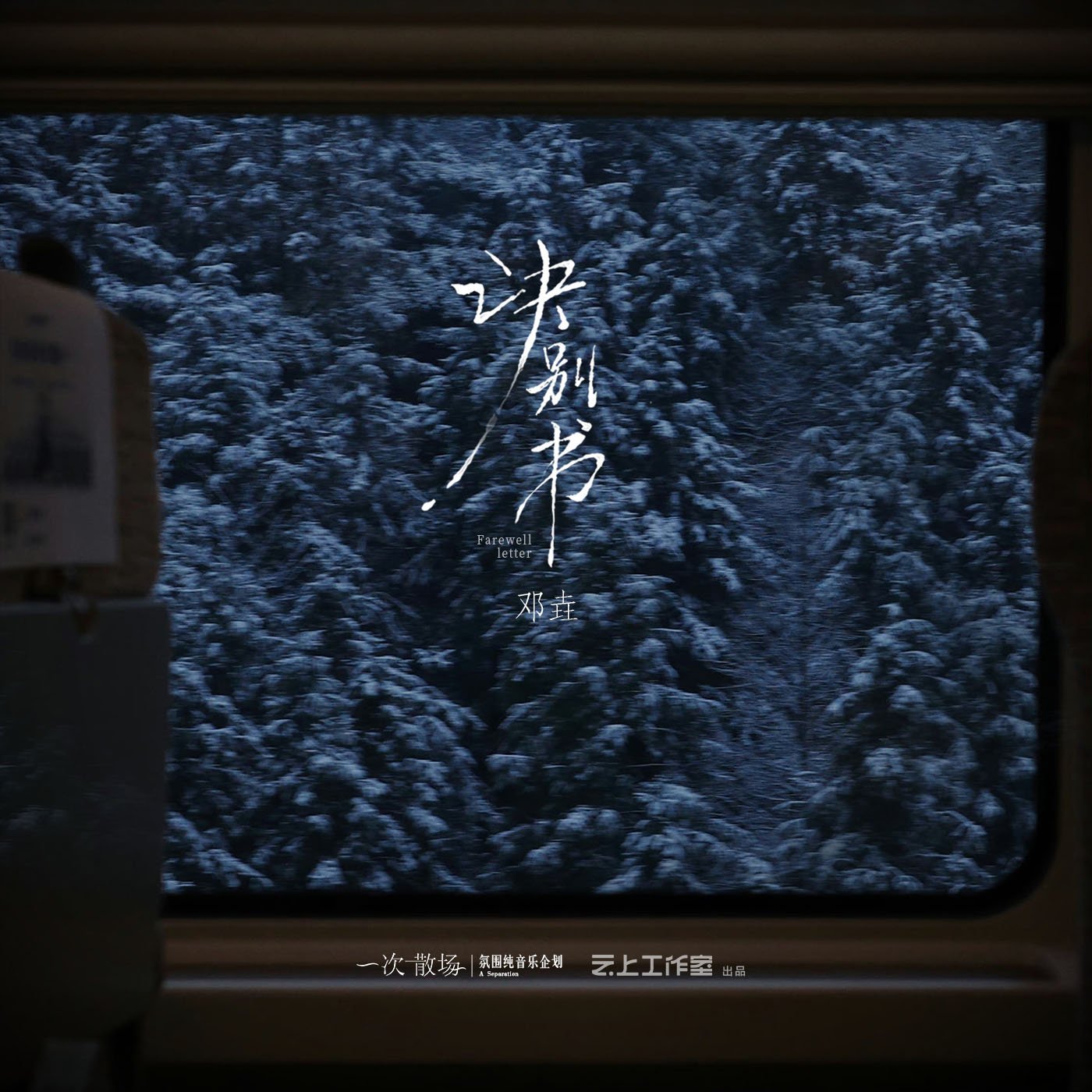
Deng Yao’s “Farewell Letter” is a work that profoundly contemplates classical emotions within a contemporary musical context. It is not merely a simple composition, but a re-creation that imbues the timeless masterpiece of Zhuo Wenjun, a talented woman from the Western Han Dynasty, with a modern auditory life. The song draws upon Zhuo Wenjun’s “The Ballad of White Hair” and “Farewell Letter,” written after she learned of her husband Sima Xiangru’s infidelity. The lament of “The red strings are broken, the bright mirror is shattered” and the resolute “The Jin River flows on, a final farewell to you” are faithfully inherited. This allows the work to be deeply rooted in a specific and classic tale of love and hate, carrying from the outset a profound affection and pain spanning two thousand years.
The most intriguing and brilliant artistic technique of the song lies in the immense tension between its musical emotion and its literary core. Arranger Wei Wei and the performers have constructed a musical world that sounds “joyful and lively.” The piano notes, played by Deng Yao himself, leaped and danced, the flute and xiao played melodiously, and the rhythm of the Chinese drums even carried a sense of movement. However, beneath this lighthearted veil lay a heart-wrenchingly tragic core. This stark contrast was not a mistake, but a masterful artistic expression: it precisely captured the psychological state of mind when facing final farewell, where thoughts inevitably drift back to the most beautiful moments of the past. As one insightful comment aptly put it, “When facing farewell, the first thing that comes to mind is the beautiful past.” The cheerful melody is like a flashback to the tender memories of the past, while the cold reality in the lyrics constantly shatters this beautiful illusion, creating a more complex and heart-wrenching auditory experience.
Ultimately, the value of “Farewell Letter” transcends a simple narrative of love, sublimating into a lament for the universal human condition. The lyrics, with their lament that “disappointments are always seven or eight out of a thousand, and countless people forget each other in the vast world,” broaden personal heartbreak to a philosophical reflection on the impermanence of fate and the coming together and parting of people in this world. Deng Yao and his collaborators, through the dialogue between Chinese and Western instruments (piano, bass, guzheng, xiao, and drums), bridged the gap between ancient and modern emotions. This song thus becomes a double-sided mirror: one side reflects the tears and pride of that brave woman from the Han Dynasty, while the other allows contemporary listeners to see their own losses and farewells reflected within it. It reminds us that the most profound partings often carry the sweetest memories, and true peace sometimes begins with the frank acknowledgment and artistic presentation of this complexity.