

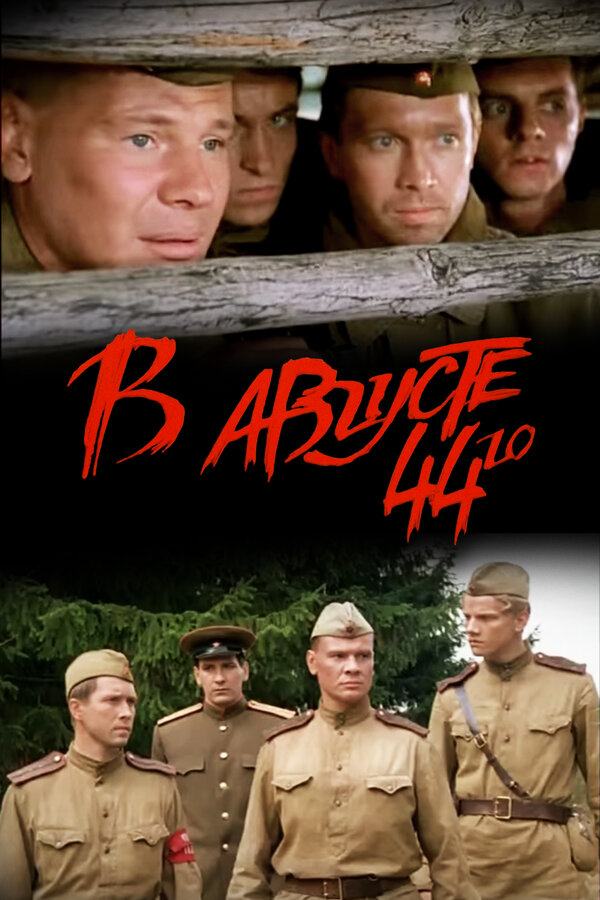
“In August 1944” (original title: В августе 44-го) is a 2001 Russian-Belarusian film directed by Mikhail Ptashuk, based on the novel of the same name by Vladimir Bogomolov. The film offers a tense and realistic perspective on the activities of the Soviet counterintelligence service SMERSH during World War II, especially in the period immediately following Operation Bagration.
The action takes place in liberated Belarus, where a SMERSH team has only three days to identify and eliminate an infiltrating German radio operator who is transmitting vital information to the Wehrmacht, jeopardizing future Soviet offensives. This race against time is amplified by the atmosphere of distrust and uncertainty typical of information warfare.
The main character, Captain Pavel Alekhin, played by Evgeny Mironov, is a meticulous and devoted officer, who leads the investigation with a combination of analytical intelligence and determination. Alongside him, Lieutenant Tamantsev, played by Vladislav Galkin, brings a contrast with his more direct and impulsive approach. The dynamics between the two highlight the complexity of counterintelligence operations and the tensions inherent in such missions.
Mikhail Ptaszuk’s direction stands out for its attention to detail and fidelity to historical realities. The film avoids excessive glorification, instead presenting a nuanced picture of the Soviet efforts to counter German espionage, highlighting both the successes and the moral and personal dilemmas of those involved.
Vladimir Sporyshkov’s cinematography contributes to the tense atmosphere, using dark frames and restrained compositions to reflect the claustrophobia and uncertainty felt by the characters. The music composed by Aleksandr Gradsky complements this atmosphere, emphasizing moments of suspense and introspection.
The screenplay, adapted by Vladimir Bogomolov from his own novel, benefits from the author’s experience as a former intelligence officer, lending authenticity to the dialogues and situations presented. This verisimilitude is essential for immersing the viewer in the complexity of SMERSH operations.
The acting performances are solid, with Yevgeny Mironov giving a subtle and profound interpretation of an officer caught between duty and conscience. Vladislav Galkin adds energy and tension as a loyal but impulsive subordinate. Aleksei Petrenko, as General Egorov, brings gravitas and authority, rounding out the main cast.
“In August 1944” is distinguished by its realistic and unfussy approach, focusing on the moral and psychological complexities of information warfare. The film is not limited to action, but also explores the ethical and personal dilemmas of those involved in such operations.
Critical reception was generally positive, with the film being appreciated for its authenticity and acting performances. It was nominated for several awards and was included in selections at film festivals, highlighting its recognition in the Russian and international cinematic landscape.
In conclusion, “In August 1944” is a film that offers a nuanced perspective on an important period in Soviet history, highlighting the complexity and tensions of information warfare. It is a production recommended for both history enthusiasts and those interested in well-constructed psychological dramas.