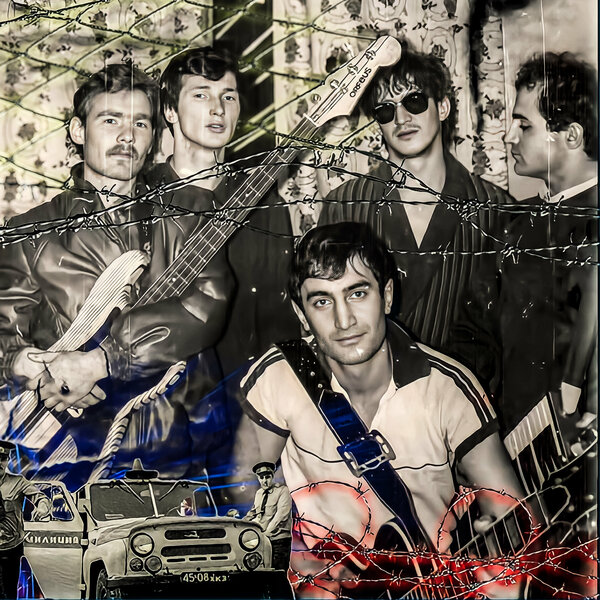


«Азия — Евразия» is a deliberately provocative track that blends folk‑style melodies with absurd, offensive lyrics. The song uses a catchy, repetitive chorus — «Опа‑опа, Америка, Европа, Азия, Евразия, что за безобразия?!» — that sticks in your head almost instantly. It feels like a parody of traditional folk songs, but with a modern, edgy twist.
音乐 Music
1989
1987
France Gall’s “Ella, elle l’a” (1987) is far more than a shimmering artifact of 80s French synth-pop; it is a rhythmic manifesto on the “je ne sais quoi” of the human spirit. Written by her longtime collaborator and husband, Michel Berger, the track serves as a glowing tribute to jazz legend Ella Fitzgerald. Musically, it is anchored by one of the most infectious and sophisticated basslines in the history of the Chanson Française, creating a hypnotic, driving tempo that mimics the very “swing” it seeks to celebrate.
1986
“Do You Really Need Me” represents the quintessence of the Italo-Disco genre from the second half of the 1980s, a track that managed to fuse the rigour of German production with the dreamy melancholy of Mediterranean discotheques. Cay Hume’s composition stands out for an irresistibly infectious synthesizer line and a punchy bassline — elements that rapidly became a benchmark for the ZYX Records label.
1984
Téléphone’s “Un Autre Monde” (1984), from their album Dure Limite, is a dreamy, existential rock anthem that blends whimsical imagery with a critique of escapism. The song’s lyrics, penned by frontman Jean-Louis Aubert, explore themes of utopian fantasy, disillusionment, and the search for meaning in a chaotic world.
Tony Esposito’s “Kalimba De Luna” (1984) is a seminal work of the Napoli Power movement, representing a radical departure from the traditional Italian canzone. From our magazine’s perspective, it is a masterclass in “Mediterranean Synthesis,” where the soulful, chaotic energy of Naples meets the rhythmic complexity of the African coast.
1980
This song tells the story of a traveler who arrives in Santa Fe and encounters a mysterious young guide named Pedro. What begins as a simple sightseeing journey quickly transforms into something much more personal and emotional. Through repetition in the chorus and light-hearted verses, the song conveys both the excitement of travel and the unexpected spark of a new connection. T
1974
Jeanette’s “Porque Te Vas” is a timeless ballad that captures the raw ache of impending loss with haunting simplicity. The opening lines—“Hoy en mi ventana brilla el sol, / Y el corazón se pone triste”—immediately set a tone of paradoxical beauty, juxtaposing the warmth of sunlight with the cold grip of heartache. Her voice, delicate yet laden with emotion, carries the weight of unspoken words and unanswered questions, painting a vivid picture of a city viewed through the lens of solitude.
1973
In the mid-1970s, as Spain cautiously emerged from the shadows of dictatorship, a revolutionary sound rippled from the guitar of Paco de Lucía. “Entre Dos Aguas” (“Between Two Waters”), a composition that would become his signature, was not conceived as a cultural manifesto, but precisely that is what it became. Emerging from a 1973 recording […]
1959
The Cello Concerto No. 1 in E flat major, Op. 107, composed by Dmitri Shostakovich in 1959, is one of the most important works in the modern cello repertoire. Written for the famous cellist Mstislav Rostropovich, the concerto combines dramatic elements, intense rhythmic passages, and moments of lyricism, reflecting Shostakovich’s distinctive style – a fusion of neoclassicism, expressionism, and Soviet influences.
25
8 Immortals Restaurant, the Beijing-based band known for their genre-defying soundscapes, delivers a visceral exploration of desire and disintegration in their 2025 single “Phantom Limb.” The track, anchored by a pulsating bassline and shimmering synths, evokes the eerie intimacy of a fever dream. Frontwoman Wang Yu’s vocals, layered with reverb and delivered in a detached whisper, narrate a surreal tale of a body “sprouting phantom limbs” and a swan trapped in a bathtub—images that blur the line between erotic longing and existential dread.